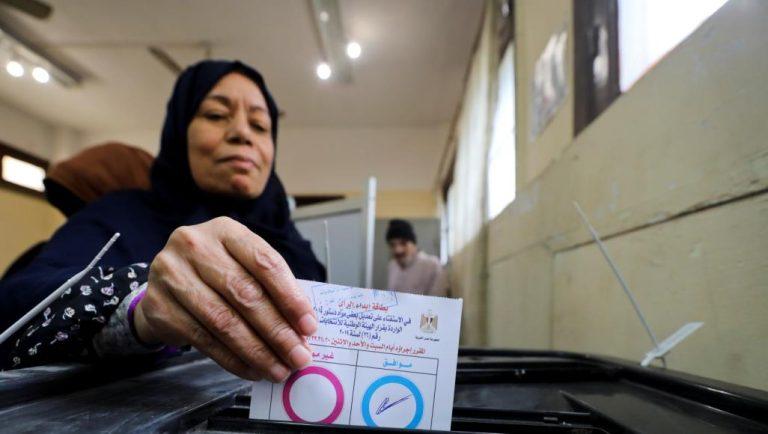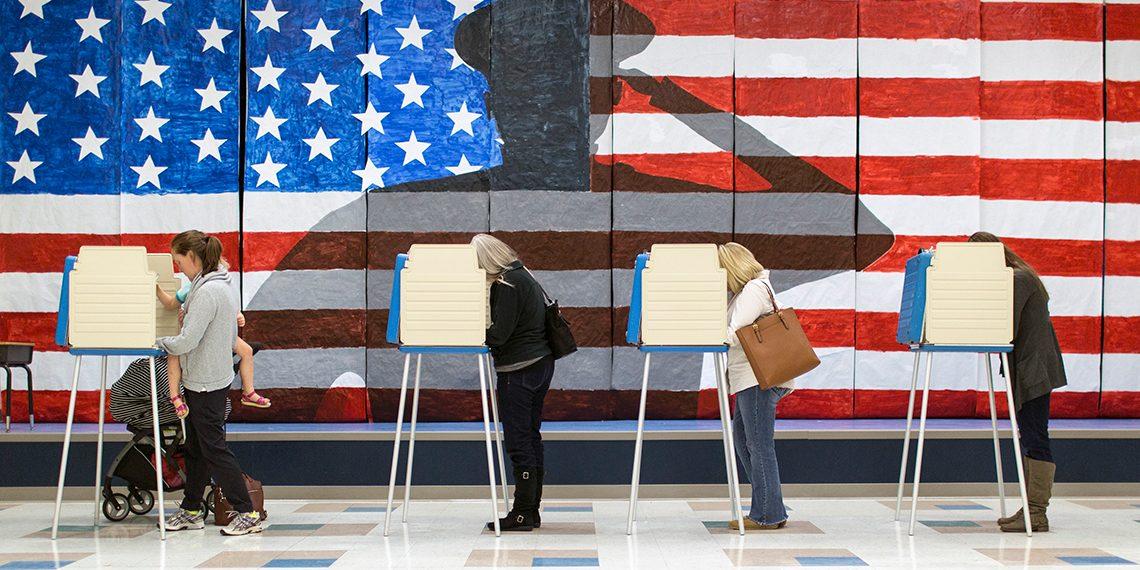
Democrats took control of the House of Representatives and Republicans controlled the Senate – Reuters
The moment US President Donald Trump ascended to power in the United States of America (May 2016) represented a turning point in the history of the country with the strongest influence in the world on the political and economic levels. Trump’s rise constituted a shake-up in the structure of the state. Despite his rise under the Republican banner, he represented a conflicting political and economic mix, which made him one of America’s most controversial and controversial presidents. One of the most prominent disputes that returned strongly to the American political surface with the rise of Trump is the bitter conflict between the two historical rivals in the American political arena, the Democrats and the Republicans, as it became clear that the Americans needed to give the Democrats, one side of the scale, an opportunity to protect their country from the impulses of the Republican president, who provokes crises even with his tweets on Twitter. Indeed, the results of the midterm elections in the United States of America, which were held on November 7, 2018, resulted in Democratic Party control in the House of Representatives, and continued Republican control of the Senate, while the two parties shared the results of the gubernatorial elections. Through this presentation, Waia for Research and Development reviews the most prominent outcomes of these elections, especially in the turbulent Arab arena, and the sources of their importance in light of the major changes taking place in the Arab region, and explains why these American midterm elections received significant Arab media and research follow-up.
The peculiarity of the American political system
First, we must quickly examine the structure of the American political system, in terms of its powers and the distribution of its powers, as the United States of America is classified as a federal republic that adopts a presidential system. The country’s Constitution of 1789 divides the federal government into three branches (authorities) to prevent one authority from tyrannizing over another, in accordance with the principle of separation of powers. One of the basic principles on which Western democratic systems are based. Accordingly, the federal political system consists of the following components: 1) The legislative authority, which consists of Congress with its two wings, the House of Representatives and the Senate. 2) The executive authority, which consists of the President of the Republic, then the Vice President, then the Council of Ministers, which are headed directly by the President. 3) The judicial branch consists of the Supreme Court and other federal courts. The President of the Republic is the Supreme Commander of the Armed Forces, and is responsible for implementing the laws passed by Congress. Therefore, the president appoints the heads of federal agencies, including the Council of Ministers. In contrast to the president’s important powers, there are basic powers vested in Congress with its two chambers (the people and the Senate), and others that are specific to each chamber without the other. The House of Representatives is more attached to the daily concerns of the people, and a member of this House represents a geographically small district, with a population of about five hundred thousand people, while in the Senate there are only two members who represent each entire state, meaning that the representation of the House of Representatives is for the citizens, while the representation of the Senate is for the states. The US Constitution grants exclusive powers to the House of Representatives, such as approving the budget, issuing draft laws, bringing charges in order to remove confidence from the head of state or judges of the Supreme Court, choosing a president if no candidate obtains the required majority from the electorate, and the right to initiate impeachment proceedings. As for the Senate, which consists of two representatives for each state (with a total of one hundred members for the fifty states), it is considered more influential in political decisions. It plays an important role in approving and circulating legislation, exercises general oversight over government departments, and largely directs the work agenda of the two chambers. The Senate is also charged with approving international treaties and agreements before the president signs them, ratifying the appointment of senior officials and judges of the Supreme Court, appointing ambassadors and military officials, and trying and removing the president after he has been stripped of confidence.
How does Congress curb the president?
Congress represents a stumbling block for the president to impose his agenda in all his decisions and movements, as the success of one of the poles of American politics (Republicans or Democrats) in seizing the majority in Congress allows the winner to obstruct the progress of the other and imbue American society with his identity and ideas. Historically, Congress has restrained the president on many issues. In the 1970s, a large Democratic majority moved to rein in the so-called imperial presidency advocated by President Richard Nixon, and Congress passed the War Powers Resolution, which sought to limit the circumstances under which a president could use military force without congressional approval.
The last midterm elections and their importance
Membership in Congress varies according to its two chambers, with six years for a senator compared to only two years for a member of the House of Representatives. Midterm elections in the United States are held in the middle of each presidential term – which lasts four years – and through them voters renew a portion of the members of Congress – a third of the seats in the Senate and half of the seats in the House of Representatives – and the governors of some states and local officials. Their importance lies in that they are a referendum on the president’s policy. The results of the recent elections represented an expected surprise, as the Democrats seized the majority in the House of Representatives, which means the end of the “absolute sovereignty” of President Donald Trump, as the Democratic Party advanced with 35 seats, while it had to win only 23 seats to secure the majority in the House of Representatives. While Republicans maintained control of the Senate, it seemed clear that Trump would face great resistance from the House of Representatives after the Democrats took control.
Results and effects
The results of those elections were reflected in American policy internally and externally, and their results became clear in the files related to Middle Eastern and Muslim issues in America, and their consequences are still at their peak at the time of writing these lines with regard to the Yemen war and Trump’s support for Saudi Crown Prince Mohammed bin Salman in the case of the murder of Saudi journalist Jamal Khashoggi.
Muslims inside America
On the internal level, the midterm elections witnessed the arrival of the first two Muslim women to the House of Representatives: Rashida Tlaib in the state of Michigan and Ilhan Omar in Minnesota. Farshida, an American of Palestinian origin, is a socialist Democrat, and won the 17th District in the state of Michigan. As for Ilhan Omar, an American of Somali origin, she is the first refugee and the first veiled woman to succeed in reaching the US House of Representatives. In addition to Ilhan and Rashida, the number of Muslims who were elected reached 57 people, whether at the local, state or national levels, according to a report by the Council on American-Islamic Relations (CAIR). The elections witnessed high participation by American Muslims. According to an opinion poll conducted by the Council on American-Islamic Relations (CAIR) on a sample of American Muslims, the percentage of participants in voting reached 95% of registered Muslims, with 78% of them voting for the Democrats and 17% for the Republicans.
Effects On the Egyptian file
As for the external level, one of the important results regarding the Egyptian file was the victory of Tom Millionski for District 7 in the state of New Jersey. He is an American diplomat who worked as Assistant Secretary of State for Democracy and Human Rights, and who previously testified before Congress in November 2015 about human rights violations in Egypt, where he presented a harsh assessment of the existing conditions in Egypt of extrajudicial killings and prevention of freedom of expression and demanded the release of political detainees in Egyptian prisons. Republican Representative Dana Rohrabaker also lost his seat from California. He is one of the biggest supporters of Egyptian President Abdel Fattah El-Sisi. He previously described him as “a defender of the values we believe in in America.” In 2014, he founded the “Friends of Egypt” group in the US House of Representatives, with the aim of strengthening relations between the United States and Egypt under Sisi’s leadership. He met with Sisi several times, including his visit to Cairo in February 2017 to strengthen relations between the two countries following Trump’s inauguration.
US-Saudi relations
This file is considered the most clear of the results of those elections so far on the Arab scene, as its results came not only at the level of the People’s Assembly, but also affected the Senate, which approved in December 2018 a draft law holding the Saudi Crown Prince, Mohammed bin Salman, responsible for the killing of Saudi journalist Jamal Khashoggi, in a vote whose results were contrary to the will of Trump, who strongly supported Mohammed bin Salman in that case. The Chairman of the Senate Foreign Relations Committee, Senator Bob Corker, presented a draft resolution to the US Senate, holding the Saudi Crown Prince responsible for Khashoggi’s killing. Corker stated that the draft law – to which 8 other Republicans contributed – emphasizes holding accountable those involved in the crime of assassinating Khashoggi at his country’s consulate in Istanbul at the beginning of October 2018.
Yemeni war
In line with the previous point, the US Senate also passed a bill calling for an end to US military participation in the Saudi-led coalition campaign in Yemen, in a major challenge to Trump’s desire to complete military cooperation with the Saudi regime under any circumstances. On the same issue, on December 12, 2018, the Senate agreed to hold a final vote on a draft law that prevents Washington from continuing to provide military support to the Saudi-Emirati coalition in Yemen. The Senate agreed by a majority of 60 votes – including 11 Republicans – to 39 to move to the final voting stage on a bill that prevents the Trump administration from providing military support to Riyadh in the Yemen war. According to observers, this step represents a strong political message to Riyadh, and a rebuke to the White House, whose bias toward the Saudi Crown Prince has reached the point of Trump’s rejection of the CIA’s assessment, which concluded that Bin Salman was involved in the Khashoggi murder. In the end, American foreign policy remains influenced by the weight of important lobbies, led by the Zionist lobby and the arms company lobby. It is certain that the American president is now in an unenviable position, as he will face resistance in the House of Representatives from the Democrats. But Trump – as usual – surprised everyone and celebrated the results of these midterm elections and considered them a “great success.”