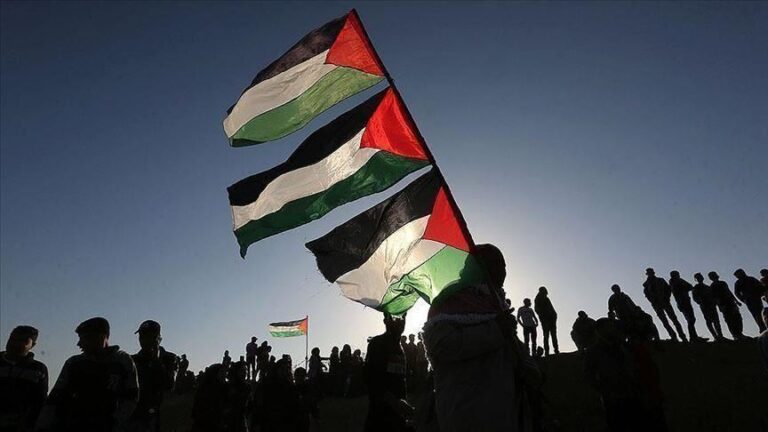
The recent events in Gaza demonstrated the ability of the Palestinian people to confront the challenge, to confront and compete with the occupation army, despite the disparity in military, human and logistical capabilities, which ultimately resulted in the death and injury of dozens on both sides. The Palestinians were not discouraged by the political breakthroughs achieved by the occupation in the Arab body. They did not wait for the return of the frozen support from the Arab brothers, nor did they pay attention to the escalating threats. They continued with the direct confrontations imposed on them through siege and war. They also continued to confront bullets with their bare chests and primitive missiles, in front of the eyes of the Arabs and the entire world, as everyone closed their eyes and ignored the crimes committed by the occupation against the Palestinians. Youth, women and men, with cold blood and an arsenal of weapons that is the fiercest in the world! This increasing imbalance of power did not prevent the Palestinians from fighting the final battle against the aggression, which not only betrayed one of the leaders of the Hamas movement, but also betrayed the efforts that were being made on more than one level to calm the situation between the Palestinian and Israeli sides, on the border between Gaza and the occupied territories. In the following lines, we review with you the full story of the 2018 Gaza victory:
Sunday morning: the beginning of events
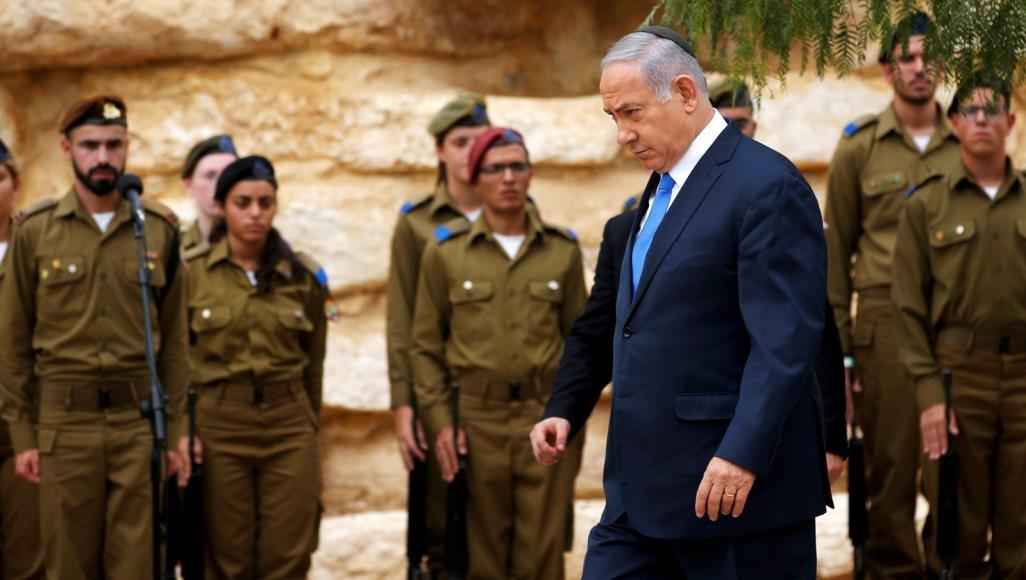
A special occupation force infiltrated Khan Yunis, south of the Gaza Strip, on Sunday evening, November 11, in a move said to represent a secret “rescue” operation and a mission to collect intelligence information. The Izz al-Din al-Qassam Brigades, the military wing of the Islamic Resistance Movement Hamas, quickly uncovered the operation, led by Qassam Commander Nour Baraka, and thwarted it by clashing with the infiltrating unit that attempted to flee under heavy cover of occupation warplane fire. This resulted in the killing of the commander of the Israeli unit, a high-ranking officer, and the martyrdom of Baraka and 6 Qassams. War sirens sounded in the adjacent settlements and an order was issued for all residents of the settlements to remain in shelters. Benjamin Netanyahu cut short his visit to Paris and returned to Tel Aviv immediately.
Monday AM: Details announced
The next morning, Al-Qassam announced the details of the clash with the perpetrators of the failed operation, in which Baraka and 6 other resistance fighters were martyred and wounded, while the occupation resistance factions threatened a harsh response and announced a general mobilization for all their fighters and field units. The Al-Qassam Brigades said that they were able to thwart a major aggressive “Zionist” plan that aimed to mix up the cards, surprise the resistance, and record a qualitative achievement, stressing that the operation was aimed at dealing a severe blow to the resistance inside the Gaza Strip. The occupation, in turn, acknowledged the death of one person, who was said to be a high-ranking officer in the occupation army. His picture was spread on social media, and the injury of another, which had a significant moral impact. After that, military analysts acknowledged the failure of the Khan Yunis operation and said that the occupation authorities would find it extremely difficult to try to justify it to the world, especially since it came after persistent efforts in recent months to reach a settlement that would lead to calm in Gaza, which portends a major military escalation.
Monday night: The resistance responds
As the sun set on Monday, November 12, the resistance responded quickly with missiles, raining down on settlements adjacent to the Strip, most notably Ashkelon, wounding more than 50 people, while the occupation forces launched intense raids on the Gaza Strip, killing 3 Palestinians and wounding 9 others. The resistance factions fired more than 300 rockets and shells from Gaza at several areas, and also targeted a bus transporting soldiers in a settlement adjacent to the Gaza Strip, east of Jabalia, which prompted the occupation authorities to reiterate that settlers should remain in shelters, while sirens sounded again in Ashkelon, Hebron, the Dead Sea region, the Western Negev, and Ein Gedi. The occupation forces bombed the headquarters of the Al-Aqsa satellite channel, the internal security headquarters in the Gaza Strip, and a number of residential buildings in Gaza, increasing the resistance by launching 100 new missiles within two hours, in addition to a direct threat issued by the joint room of the Palestinian resistance factions to increase the range and intensity of rocket bombing, and expand the circle of fire if the occupation continued its aggression, while Netanyahu and his Minister of Defense met to hold urgent consultations at the headquarters of the Ministry of Defense after the developments in Gaza.
Tuesday dawn: The resistance takes control
In the early hours of the morning of Tuesday, November 13, a statement was issued on behalf of the Al-Qassam Brigades that the joint room of the resistance factions was in a state of serious consultation to expand the circle of fire, clarifying that Ashkelon is the beginning and that Ashdod and Beersheba are the next target of the resistance if the occupation persists in its aggression against civilians in the Strip. Al-Qassam threatened that about a million “Israelis” would be waiting to enter the circle of the resistance’s missiles if the aggression continued. The occupation leadership blamed what happened in Ashkelon, followed by the Al-Quds Brigades, the military wing of the Islamic Jihad movement, saying in a statement that the continuation of the aggression in this way and the enemy’s targeting of homes, public places and civilian headquarters had made the resistance take a decision to expand the circle of response, and to bomb beyond the cities of Beersheba and Ashdod. The occupation gangs warned the settlers not to leave the area. Shelters, while the occupation media announced that two settlers were killed and other settlers were injured with varying injuries as a result of a missile falling on a residential building in Ashkelon.
Tuesday afternoon: Mediation begins
At midday on Tuesday, the authorities in Cairo announced the intensification of their contacts with the two sides to stop the mutual escalation between the two parties in the Gaza Strip, stressing that they take the same position from both sides, while the American response was, as usual, supportive of the occupation, as the US President’s envoy to the Middle East, Jason Greenblatt, stated that “Israel” is the victim of attacks, and said that it is forced to respond militarily in defense of itself. As for the Palestinian Authority led by Mahmoud Abbas, after holding the Israeli government fully responsible for the ongoing attacks on the Gaza Strip, he returned to demand that Hamas hand over the Strip to its authority, considering that this is the only way to provide protection for the Palestinian people and prevent the recurrence of massacres against them.
Tuesday evening: ceasefire
At the end of Tuesday, the joint room for the resistance factions announced that an agreement had been reached for an immediate ceasefire and to prevent escalation with the occupation, under the auspices of the Egyptian authorities. Gaza City witnessed celebrations of the ceasefire agreement with the occupation, while settlers blocked roads in the Sderot settlement in protest against the agreement. Militarily, the Al-Quds Brigades announced the introduction of a new missile into military service during the recent round of escalation in the Gaza Strip, confirming that the missile caused severe damage in occupied Ashkelon.
Later repercussions: Lieberman’s resignation
The results of the defeat of the occupying army were devastating within Israel, as Defense Minister Avigdor Lieberman resigned, considering that this agreement was only a decisive confirmation of the failure of the surprise attack on Gaza, and another proof of Hamas’s victory in the confrontation, and he confirmed that the “Israel Our Home” party would withdraw with him from the government coalition. Lieberman attacked the Qatari regime, considering it a direct reason for strengthening the emergence of militants in Gaza, stressing in his resignation statement: “Two decisive turning points that prompted me to resign, namely the introduction of funds to Hamas through the Qatari ambassador, and the recent ceasefire agreement,” adding: “Our response to 500 missiles was merely a humiliating withdrawal.”
Let’s crush Gaza: the Arabs are not interested
But what most draws attention in Lieberman’s statements is his talk to the internal public about the justifications for his call to crush the Gaza Strip, as he stressed that the Arab world is no longer preoccupied with the Palestinian issue, and that this period is an ideal opportunity that may not be repeated to liquidate the power of the Palestinians forever. Lieberman said in his statement: “I met with many representatives of the countries of the Arab world, and I did not feel that they were interested in the Palestinian issue. I think we can just do it now, or let us continue to buy partial calm and ignore the danger escalating every day on the border.”
The resistance comments: an earth-shattering victory
Lieberman’s resignation was considered by the Palestinian resistance factions to be an admission of defeat and inability to confront the Palestinian resistance and a political victory for Gaza. Hamas leader Sami Abu Zuhri confirmed that Lieberman’s resignation “reflects how Gaza has succeeded, with its steadfastness, in causing a political shock in the occupation arena.” The official of the Islamic Jihad’s media office, Daoud Shehab, said, “This resignation is one of the quick repercussions of the failure of the occupation and its recognition.” “By defeating him,” he added, “Lieberman was too helpless to stand in the face of resistance.” As for the military spokesman for the Al-Quds Brigades, Abu Hamza, he confirmed that “the resistance did not limit itself to deterring the enemy militarily, but rather it confounded his political calculations,” adding: “Look at the political massacre among the occupation leaders, which was based on inability to confront Gaza.” He believed that “the resistance was destined for victory and development, and the enemy was destined for failure and retreat,” considering that “Lieberman’s resignation is an example for those who wanted to test the resistance in Gaza.” The Popular Front for the Liberation of Palestine, for its part, considered that Lieberman’s resignation “is a result of the resistance’s ability to withstand aggression and the inability of the Zionist military and political establishment to defeat the resistance or impose its conditions on it.” Kayed al-Ghoul, a member of the Front’s Political Bureau, considered that Lieberman’s resignation “reflects an escape from the responsibility he bears, whether in the failure of the complex security operation in Khan Yunis or the failure of the aggression on Gaza.”
The result of the war: the collapse of the right-wing government
Over the course of 30 years, no government has been able to complete its term to the end. After Lieberman’s resignation, the Minister of Immigration and Integration, a member of the “Israel Our Home” party, Sofa Landwehr, also submitted her resignation, while opposition leader Tzipi Livni said that “the government of failure in security must go.” As for the head of the “There is a Future” party, Yair Lapid, for his part, he saw that “Netanyahu’s government has finished its role.” The Hebrew media reported, quoting people close to Netanyahu, as saying, “If Lieberman resigns, we will dissolve the Knesset and call for early elections.” Earlier, Israeli media quoted a government source as saying that if Lieberman resigns, “Hamas will have toppled the right-wing government.”
History lesson: The Earth is ours
The heroics of Gaza and its valiant people in the recent confrontation demonstrated the logic of aggression, which does not give weight except to the logic of force, and that force, no matter how brutal, breaks on the rock of truth, steadfastness and resistance, and that the little Gazan deterrence combined with a lot of truth, credibility and steadfastness has proven its worth in deterring aggression. Perhaps the celebrations of the people of Gaza for stopping the aggression without political conditions puts everyone before a historical and moral responsibility to support the Palestinian people in regaining their land and preserving their legitimate rights to dignity. And live freely on his land.