“There is no victor but God.” This is perhaps the most prominent phrase that will haunt your eyes everywhere if you ever decide to visit the southern Spanish region of Andalusia. There you will find the Arabic script printed everywhere, except for the tongue of the people of the country, and the Islamic phrases make you feel as if you are in a large prayer hall, the peace of which is only disturbed by the liquor bars and their exciting signs, the spacious discos and their loud music emanating from everywhere. The Europeans did not leave a path to erasing the Arab and Islamic identity in Spain after the fall of its last fortress (Granada) and the departure of the Muslims from it in the year 1492 AD, but they took it… Inquisition that took thousands of lives to force them to leave Islam and embrace Christianity, restrictions on the Moriscos (people of Andalusia who openly converted to Christianity, Muslims in secret) to test their Christianization or force them to leave, stripping families of their Islamic titles, and erasing Arab identity from buildings. Castles and palaces. Despite this, some evidence remained difficult to erase and forget, and remained steadfast for centuries in the face of the most violent, sadistic revenge campaigns throughout history, and bear witness to the long and ancient history of Muslims in the Iberian Peninsula. Perhaps the most prominent example of this steadfastness is the region of Andalusia, or “Andalusia” as the Spanish call it.
Introduction to the region
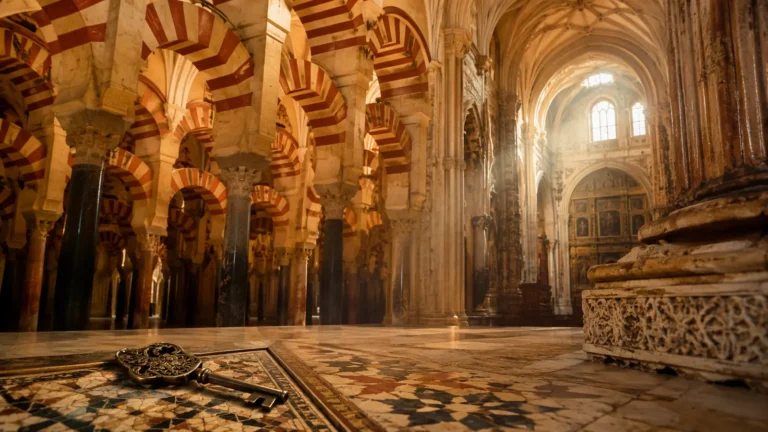
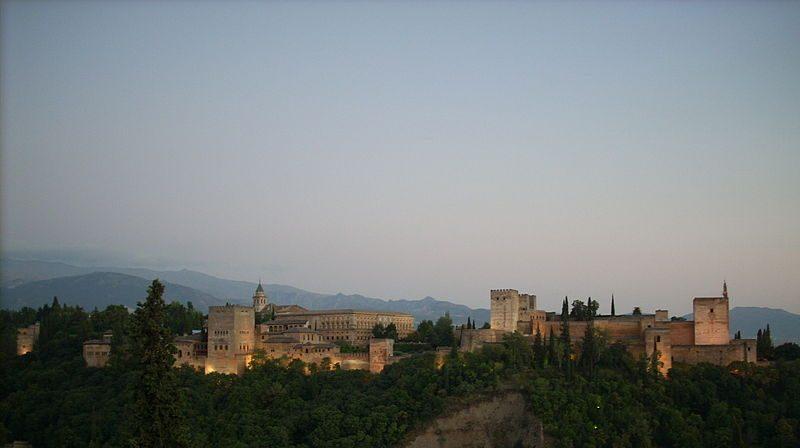
The Andalucía region (Spanish: Andalucía), is one of the most important autonomous regions of Spain, one of the most densely populated regions, and the second largest region in Spain in terms of area. Its capital is the city of Seville, and the region is divided into eight provinces whose Arab identity is still strongly present in their Islamic names: Huelva, Seville, Almería, Cordoba, Málaga, Jaén, Granada, and Cádiz. Its population is 7.4 million people, and its area is 87,000 km². The region’s economy is based on agriculture, fishing and canning fish in the ports, as well as recreational and historical tourism. The region includes many Islamic monuments, most notably the Arab Alhambra Palace in Granada, the Mosque of Cordoba, the Palace of Carlos V, the Albayzin neighborhood in Granada, the Alcazaba in Malaga, La Giralda in Seville, and the height of Moulay Hassan (MULHACEN), one of the (Bani Al-Ahmar) kings who ruled Andalusia during the era of the Taifa kings.
Arab history of the region
In the year 711 AD, the Moroccan Muslims (in Spanish: El Maroco) living in North Africa, accompanied by Berber and Arab soldiers, crossed the Strait of Gibraltar and began their invasion of the Visigothic Kingdom of Hispania. They then crossed the Pyrenees and took control of Septimania in the year 719, reaching the last province of the Visigothic Kingdom to Narbonne. At the time of its fall, the Visigothic state was not weak, nor were the Muslim armies strong enough. At any historical point in this era, the invading Islamic armies did not exceed 60,000 men, but they succeeded, thanks to the courage of their soldiers, in defeating their opponents and establishing an Islamic rule that lasted 300 years in most of the Iberian Peninsula, and 770 years in the Andalusian region: Granada and its environs. The Muslim rule of Andalusia was not military and devoid of culture and creativity. Rather, Cordoba (the capital of the Andalusian Umayyad Caliphate) was transformed into one of the three major cities of the world in its time, and a platform for science and civilization in the ancient world, along with Baghdad and Constantinople. It was described as the beacon of Western Europe, at a time when the latter was languishing in ignorance and backwardness… and it proves its favor. Andalusia and its cultural and scientific progress have entrenched an identity in the conscience of its people that has remained steadfast for centuries. We will review some of it in the following lines.
The presence of Arab identity in the culture of the region
The two great metropolises of Islam (Baghdad in the East and Cordoba in the West) remained in constant contact, despite the political rivalry between them. The people of the East and the West would exchange visits, meet in the field of thought, and dispute in the field of politics. These mutual visits had a far-reaching impact on the prosperity of sciences, literature, and the arts, which was evident in the culture and identity of the current inhabitants of the Andalusian region. Perhaps the most important thing that distinguishes the Andalusians currently is their special Castilian Spanish dialect, in which the trace of the Arabic letter can easily be noticed, starting from the names of towns to people, all the way to hundreds of Arabic words transmitted without distortion, such as sugar, rice, oil, palace, castle, and pond, as well as other words that were borrowed from Arabic with some distortion, such as the word like him and another and even meeting, God willing, and it is the same dialect used in the Americas today given that the Spanish exploration campaigns for the separate continent began from Seville is the capital of Andalusia. As for Andalusian music, it can be clearly described as oriental Arab music, as it represents the summary of the artistic data of human elements, including Arabs, Berbers, and Saqalbans, who coexisted with the local population under the Arab-Islamic rule of Andalusia. Then this music had a strong direct influence in southern France and Europe. It is noteworthy that the first college of music in Europe was in Salamanca (13th century), as well as the translation school in Toledo. The study of music in the Andalusian institutes became part of the mathematical sciences, and was attended by students from various parts of the known world at that time. As for singing, Arabic melody is still present and its balanced words are distributed among two types of poetry subject to composition: muwashah and zajal. It is present in the modern songs of the region, where the Arabs usually composed the muwashah from a section called “badaniyya” to which the second section was measured in composition, followed by what is called the khana, chain, or wheel, and each section or section was different from the other in composition, and this is actually still happening today in the region’s distinctive European music.
Arab Muslims and flamenco dance
Perhaps Spain in general is not distinguished from an artistic standpoint by something more famous than modern Spanish dance, which is characterized by lightness, grace, and artistry in movements, and the clinking of gongs to the tunes of different musical rhythms. This is what is called flamenco dance. But what many Spaniards do not know is that this dance was a means of hidden protest for the Moriscos in which they broadcast their suffering, chanting loudly (Ole), which is believed to be a quote from the word (Oh God) that they heard from Moroccans when expressing pain or amazement. The beginnings of flamenco dancing go back to after the fall of Andalusia in 1492, due to the injustice to which the Muslim Spaniards and some minorities were subjected to the injustice of forced baptism. The Muslim Spaniards were called “Moriscos” in that era, and they merged with the gypsies in their lives. They lamented the situation they were in through stanzas and narrative singing that simulated their painful reality. The word “flamenco” meant the peasant who was subjected to persecution and injustice as a result of the fall of Andalusia in 1492. His land was robbed, and this art appeared as a form of pain and sadness as a result of what people felt about the annihilation of their culture. In general, the steadfastness of the Arab identity of the region is remarkable, as the evidence has remained difficult to forget and erase, and has remained steadfast to bear witness to the long and ancient history of Muslims in the Iberian Peninsula. However, on the one hand, it reminds Muslims of their failure to preserve their history, and reminds the West that a civilization nurtured by Arabs and Muslims in Europe was the basis for contemporary Western civilization.