
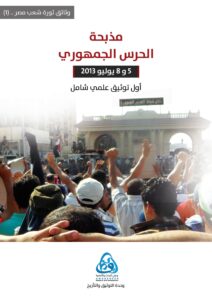
Genocide and nothing else… the results of the analysis of the “Republican Guard” victims
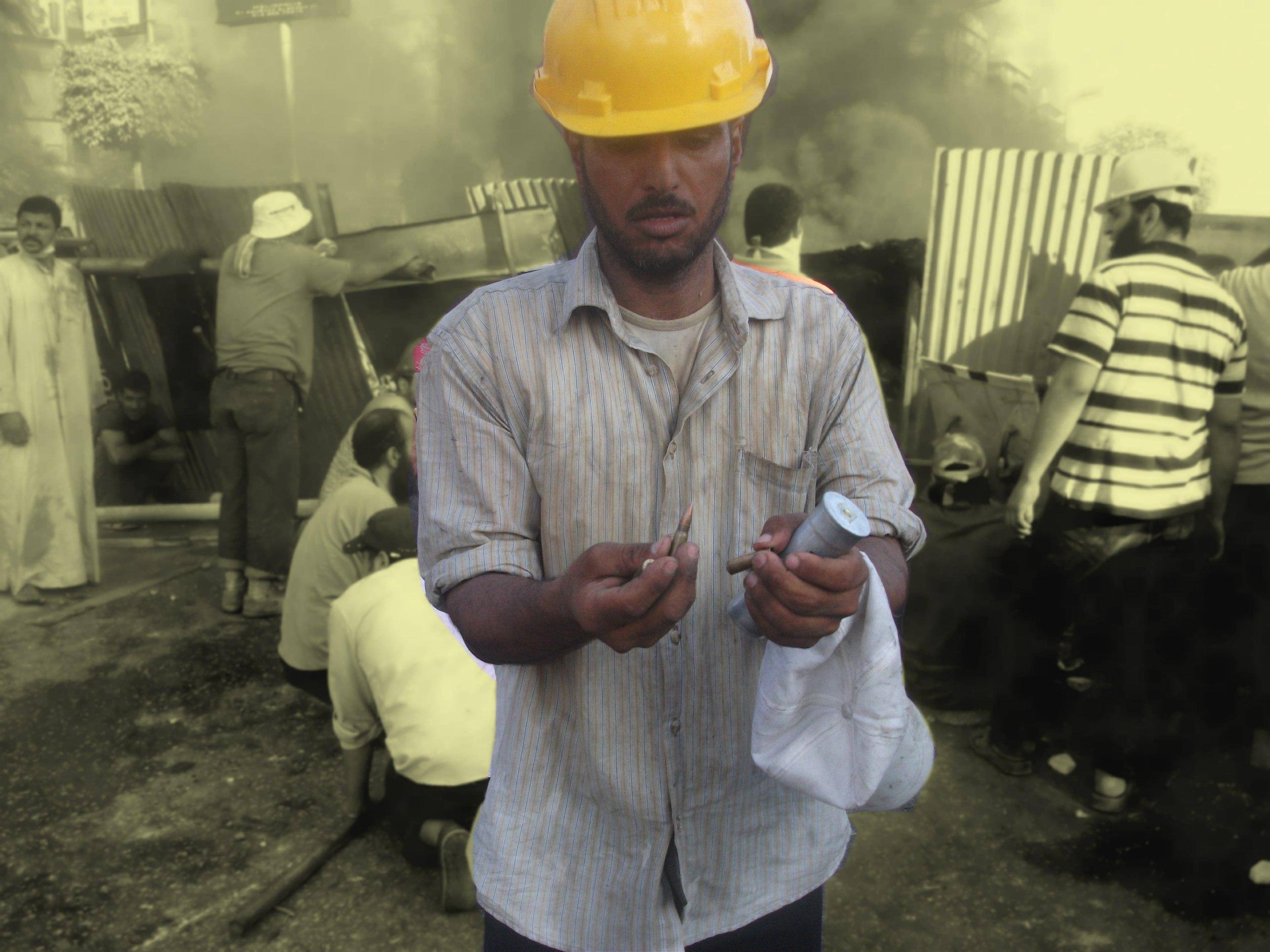 The importance of scientific and documentary investigation of the victims of the Republican Guard massacre lies in the many repercussions it had, whether in the number of martyrs, injured, and detainees, or in the reactions of the local and international community. Because it represented a clear political change in the course of the coup leaders’ dealing with the red lines of the January 25, 2011 revolution, transgressing all the taboos of the revolution, and daring to demolish its most important gains, which are the freedom of assembly, demonstration, and sit-in.
Special documentation
Due to the sensitivity of this incident, and the reasons presented above, the Waaa Foundation for Research and Development, based in the British capital, London, commissioned it to issue a comprehensive and integrated documentation supported by systematic and audited research, in a scientific document entitled: “The Massacre of the Republican Guard, July 5 and 8, 2013: The First Comprehensive Scientific Documentation.” It singled out the martyrs and injured victims with an additional specialized analytical effort in its fifth chapter. While working on issuing a comprehensive list of the injured and martyrs based on 62 support lists for the injured and 42 support lists for the martyrs; The scientific team – with the assistance of specialized doctors – transcribed medical information about the injuries of the martyrs and the injured from those lists, as well as medical information received from other sources such as: reports of government and private hospitals that began receiving the injuries, reports of death certificates, and direct inspection of the bodies of the martyrs in the Zeinhom morgue through the description of the Medical Syndicate team at the time of the massacre, as well as the description of the field hospital doctors, and all the documents and reports that were concerned with explaining the injury in a medical and professional manner. The scientific team formed a specialized medical team of university professors and senior consultants to do the following:
- View and study the unified list.
- Writing a medical report that includes a description and scientific analysis of infection data among survivors of the massacre
- Writing a medical report that includes a description and scientific analysis of injury data among martyrs
- Classification of injuries into different categories according to objective medical standards
- Explaining the statistical significance and moral difference for each of them through the use of statistical programs
- Make a summary of the cases of the injured, and another of the cases of the martyrs
- Implementing a workshop with the participation of the medical team and the scientific team to draft the final report
- The medical committee presented its report in the following sections:
Data handling
- Patients were divided – according to severity (type of injury) – into fatal injuries, moderate injuries, and minor injuries.
- The injuries were divided according to the causes of injury into:
- Injuries caused by live bullets, and this includes injuries to three types of bullets that were used in that massacre: explosive bullets (dum-dum), rubber bullets, and penetrating bullets.
- Birdshot injuries, which include two types of injuries:
- Remotely, more than 40 metres.
- Up close, less than 40 metres.
- Batons, electrified batons, tear gas, chlorine or poison.
- The injuries were divided according to the location of the injury on the body (head – chest – abdomen – extremities) into:
- Injury in one place of the body.
- Injury in two parts of the body.
- Injury in three places of the body.
- Injury to four or more places on the body
Statistical results:
A. Total number of victims: The total number of victims, according to the unified lists of martyrs and injured, is 945, including 145 martyrs, i.e. 15.34% of the total, and 800 injured, i.e. 84.66% of the total. Noting that the guard’s perimeter accommodates approximately ten thousand people; The infection rate is 9.45%, with one infected person for every 9 who were not infected. for. Analysis of the cases of the injured (800 injured): 1- Injury level: The results showed that severe injuries constituted 376 injured, representing 47% of the total injuries, including 372 injured with penetrating wounds in the abdomen, chest, or limbs, and only 4 non-penetrating injuries, but they were classified as severe, due to the trauma they caused to the injured as a result of the rubber bullets. As for the moderate injuries, they constituted 408 injuries, representing 51% of the total injuries, of which 392 were penetrating wounds. The moderate injuries did not contain a non-penetrating wound, but what raised the percentage to 51% was the presence of eye injuries with 16 injured people. As for minor injuries (gas, one case, cartridge, one case, clash, 14 cases), they represented only 2% of the total injuries, and thus severe and moderate injuries constituted 98% of the total injuries. 2- Causes of injury: Data on the causes of injury were monitored, and it was found that 568 cases of injury were caused by the use of bullets, i.e. 71.56% of the total injuries, of which 244 were of the explosive type. It was also found that 217 cases were caused by the use of birdshot, i.e. 27.5% of the total injuries, including 50 close-up injuries. One case of gas injury and 14 clash injuries were recorded. 3- Type of weapon (firearm): Data on the type of firearm was monitored, and it was found that 40% of injuries were caused by the firearm described as “penetrating,” 30.5% were described as “explosive,” and the least was described as “rubber.” 4- Type of weapon (cartridge): Data on the type of weapon (cartridge) was monitored. The number of those infected with birdshot from a distance exceeded the number of those infected with birdshot up close (less than 40 meters). 5- The relationship between the level of injury and the weapon used: Data on the level of injury was monitored with the type of weapon used, and it became clear that in severe and moderate injuries, the firearm was the source, especially explosive bullets, as injuries with firearms represented (306 out of a total of 376), representing 81% of the total severe injuries. And in moderate injuries, injuries with firearms represented a number (254 out of a total of 408), accounting for 62% of the total moderate injuries. 6- The relationship between the level of injury and the number of places of injury: Data on the level of injury was monitored with the number of places of injury, and it became clear that the number of people with single injuries (in one place on the body) constituted 30% of the total. Injuries, most of which were severe, 170 out of 240, representing 70% of those infected. As for the combined injuries (more than one place), the remaining percentage constituted 70% (injuries in two places of the body 34%, the most severe 72%, in three places 27%, most of them moderate 97%, and in four or more places 9%). 7- The relationship between the type of weapon and the location of the injury: The victims were classified according to the type of weapon and the location of the injury. The largest share of single cases was for chest injuries (64 cases), head injuries (80 cases), abdominal injuries (56 cases), and limb injuries (40 cases). Table (26) shows the locations of the injuries.
Summary of results:
At the conclusion of the comprehensive medical report describing the cases of injury among the martyrs and injured, the scientific committee preparing the content of the report considers presenting a summary of the results as follows: On Friday and Monday, corresponding to the fifth and eighth of July in the year 2013 AD. Forty-eight hours after the Minister of Defense, Lieutenant General Abdel Fattah Khalil Al-Sisi, carried out a comprehensive military coup and committed the crime of forced disappearance of the President of the Arab Republic of Egypt, Dr. Mohamed Morsi, and unconfirmed reports emerged that he was detained in the building of the Republican Guard Officers Club in eastern Cairo, large crowds of demonstrators gathered and demonstrated peacefully in front of the aforementioned place, raising pictures of the elected legitimate president of Egypt, rejecting the coup, and demanding his release and enabling him to carry out his constitutional duties, while the peaceful demonstrators were exercising their legal rights. In gathering and expressing the opinion guaranteed by the Constitution, combat groups belonging to the Egyptian Armed Forces and combat groups of the Egyptian police, wearing uniforms and government weapons, and under the direct responsibility of President-designate Adly Mansour and the Ministers of Defense and Interior, Abdel Fattah El-Sisi and Mohamed Ibrahim, as stated in the statement of the joint press conference between representatives of the two ministries, showed solidarity among themselves and colluded in the process of mass killing. The conference was characterized by deception and complete disregard for all the victims, and only mentioned the injury of two police martyrs! As for the injuries among a large number of victims, whose various injuries were detailed in the report and documented by a specialized scientific team; The press conference did not mention it and completely ignored it as if it did not exist. The reports submitted by the families of the victims were ignored and the prosecution did not fulfill its duty. In the midst of this failure of the Egyptian authorities to establish justice, this documentary effort is the beginning of pursuing the real criminals who managed, carried out, and participated in this crime against humanity. It is also a means of proving the rights of the victims and working to redress the material and moral harm inflicted on them and their families. As stated in the report, these parties directly attacked the peaceful protesters in front of the Republican Guard using explosive, penetrating, rubber-coated dum-dum firearms and birdshot at close range. It is excessive violence. They killed 145 and injured 800, according to the consolidated lists that documented the victims of the massacre. At the end of the chapter, the editors presented some of the overall results resulting from the comprehensive reading of the report, which produced the moral implications of the statistical analysis, which are: A. Accuracy of receiving patients: Receiving one case of injury due to gas infection despite the gas curtain Dense indicates the accuracy of receiving patients; Cases were received according to their severity, as evidenced by the fact that the unregistered number of infections is much greater than what was recorded. for. The use of excessive force was not proportional to what we might call dispersing a sit-in. Different types of firearms were used, the most famous of which were dum-dum bullets. Birdshot was also used extensively and at close range, and the comments of soldiers filled with hatred when one of them proudly said: “The street is full of blood.” As the results showed; Minor injuries (gas, one case, birdshot, one case, clash, 14 cases) represented only 2% of the total injuries, while severe and moderate injuries constituted 98% of the total injuries, which is the greatest evidence of excessive use of force. C. Dum bullets: This type of firearm was the key to the death and injury of hundreds of peaceful demonstrators. The tables showed that most of the injuries that led to death were caused by bullets (130 out of a total of 145, or 89.6%), and the largest percentage was of the dum-dum type of explosive bullets (72%), which is the very precise type that aims at the target using a laser, and thus the victims were subjected to direct sniping and premeditated killing with their bare chests. D. Accuracy of laser aiming: Statistical data showed that the moral significance of head and chest injuries shows that the aiming process is characterized by precision and deliberate sniping with the aim of killing and causing shock and terror in the hearts of the demonstrators. It should also be taken into consideration that aiming at the heart using a laser, as in a dum-dum weapon, completely destroys both the lung and the heart. e. Intentional and repeated beatings: It was found that very serious injuries prevailed in cases in which the injury occurred in two places (198 out of a total of 378), and that moderately serious injuries prevailed in cases in which the injury occurred in three places (210 out of a total of 408) (intentional and repeated beatings), where it was not enough to hit them in the head, but they also hit in the head, chest, abdomen, and limbs; This increased the number of infection sites and increased the risk levels. The statistical data included in the report, which showed the percentage of multiple injuries to the chest, head, abdomen, and extremities, and the correlation between the type of weapon, accuracy of aiming, and multiple injuries, also showed that there was repeated gunfire, which means that intentional killing was a systematic goal of the forces charged with this massacre. and. Genocide and nothing else: The total number of victims reveals 945 injured, including 145 martyrs, i.e. 15.34% of the total, and 800 injured, i.e. 84.66% of the total. Noting that those who were present Of the demonstrators at the site of the event at the time of the massacre (2,500 according to eyewitness estimates), 37.8% were injured, with a ratio of one injured for every three who were not injured. This number of victims is a terrible number, and expresses that what the forces did was not to disperse the protesters or repel an attack from a terrorist group – according to the official version, but rather amounted to an operation of genocide in the truest sense of the word. g. Physical liquidation, intimidation, and shock: The summary of the statistical statement is that it determines through tables and comparison of percentages that the killing was intentional and represents a blatant type of physical liquidation. What was concluded from the causes of death recorded in the death certificates and burial permits for martyrs was that they included gunshot wounds and the resulting causes of death, such as: laceration of the brain tissue and massive oral bleeding, laceration of the left lung or lungs and bleeding, fractures in the ribs and laceration of the lungs, fractures of the bones of the skull and laceration of the brain, heavy bleeding in the abdomen and laceration of the viscera.
Introduction to the institution
“Awareness Foundation for Research and Development” is an independent scientific body that cares for all types of knowledge related to building individual and collective awareness. It is not limited to analyzing and anticipating the future in scientific, political, economic, and other issues, but rather makes history, documentation, monitoring, and blogging platforms a prominent axis of its launch. The driving motive for creating this ambitious project is an integrated, civilized institutional vision for humanity in the twenty-first century, a vision that seeks life in the best possible ways and raises the importance of the basic values and principles common to human beings. The Foundation is committed to publishing facts and monitoring events, and in doing so it respects specialization, addresses issues objectively, takes into account intellectual diversity and natural difference, and recognizes the value of the human being who has been honored by his Creator and appointed as successor on earth. In doing so, it seeks to meet the need of society in its various segments to spread culture, awareness and understanding among the general public and not among the elite alone.