
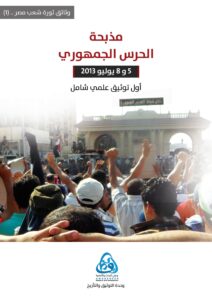
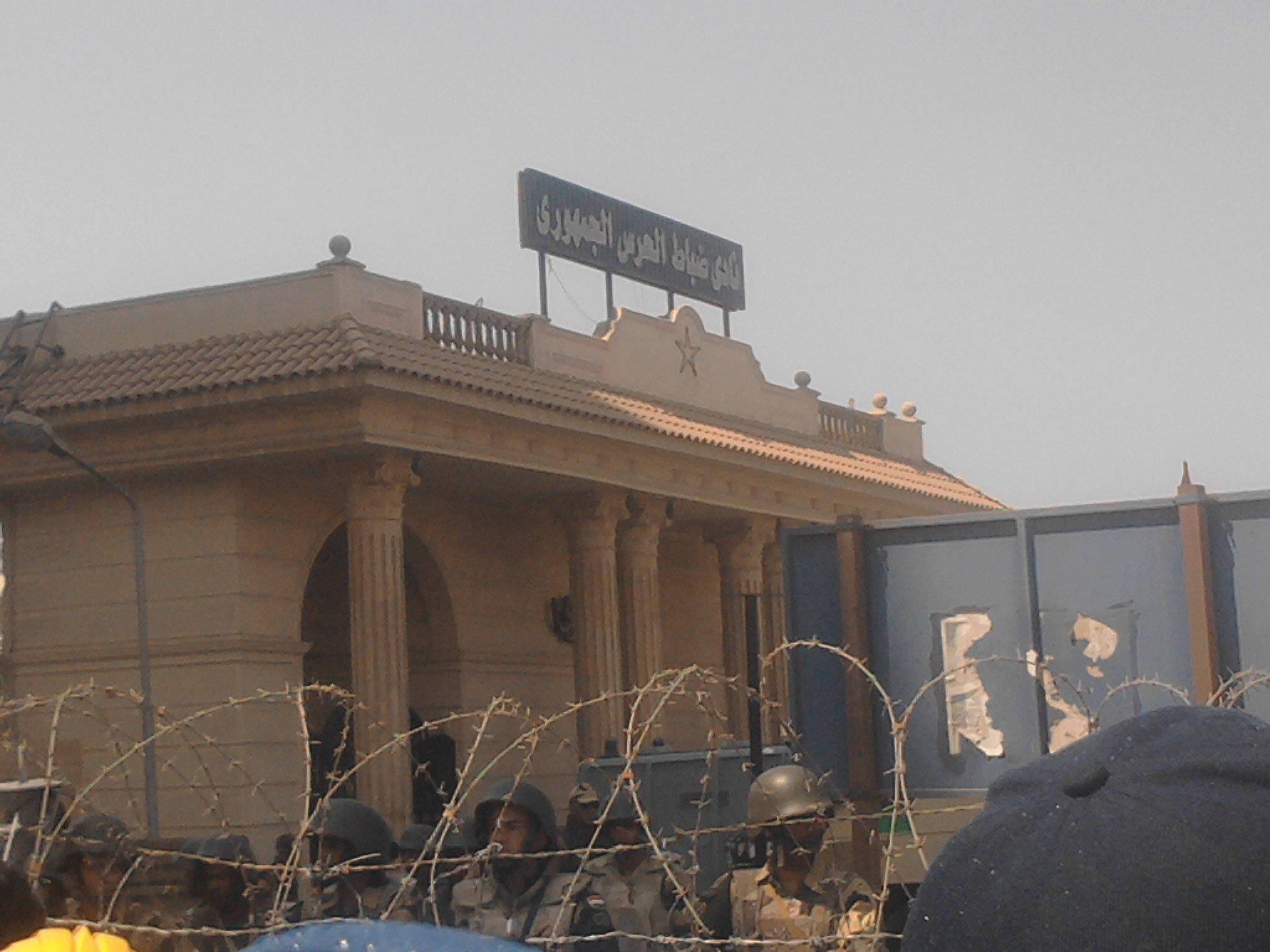
The martyrs of the “Republican Guard”… peaceful people who received the first “military” bullet
“The murderers were targeted by the rifles at the command of the corrupt, cruel tyrants, with the consent of the immoral tyrants, with forbidden money and treacherous bullets, and at dawn prayer they set out with arrogance towards their people and fear of their masters. They deafened their ears to the call to prayer and the muezzins, and their eyes were blinded to the prayer and the worshipers. They did not respond to the scream of a child, or the fright of a woman, or the plea of an old man, or the call for help of a wounded man, and they did not pay attention. The raised hands of young people ask you to stop shedding blood. We are your brothers, we are peaceful, and we stood here for you, for us, and for the sake of the nation. But the criminals continued their brutal path and their authoritarian arrogance, blasting prostrate foreheads, gouging out crying eyes, smearing fresh faces, cutting off arteries, and stopping the flow of life in them. The British capital, London, to summarize what the encyclopedia documented about the martyrs of the massacre: Their numbers, ages, occupations, governorates, and how this happened to them. This is the section to which we devote the following presentation:
Detailed data
Anyone who follows the process of counting the number of martyrs in this massacre will notice that the section on martyrs in this documentary encyclopedia is the most comprehensive of what has been written in this context so far, given the scientific effort exerted by the documentation team and the methodological procedures it includes in an effort to compile a unified, audited list of the martyrs of the massacre. It is considered one of the strengths of this section, and gives the list considerable authority, and this is evidenced by the tools and sources that the team used. The human effort he devoted to comparing different reference lists, sorting out duplicates and similarities with great accuracy, and collecting evidence and clues from more than one source to prove and verify the information. This section included detailed data and information about the largest amount of victims of the massacre that the editors were able to access. The research team investigated and documented all of this and other names of the martyrs who fell in the massacre on July 5 and 8, 2013, and then prepared a unified list of martyrs, which can be considered the closest to the truth and the most comprehensive in the data, while providing a reading guide for all the symbols contained in it. The document confirmed the authority lists that it relied on, and they amounted to (42) two. Forty lists, I classified them, and created a code for each list. This final unified list issued by the “Wa’i” Foundation remains subject to amendment if the name of a martyr is added or the related documentary information is completed. This list includes the martyrs of the two massacres, and then classifies them into qualitative lists, statistics, and graphical percentages according to age, gender, profession, and geographical distribution based on data collected from all authority lists.
Disciplined approach
Below we present the features of the approach adopted by the scientific team, with the intention of documenting the martyrs of the Guard Club massacre in the encyclopedia, as those features were determined in the following steps: First: Collecting all possible data on the martyrs of the Republican Guard Club massacre on July 5 and 8, 2013, from various sources, which amounted to 42 authority lists. Second: Coding the authority lists and arranging them chronologically according to the date of their publication. Third: Write a description for each list separately, explaining the date of its issuance, the source of issue, the type of data available, and the most important notes. Fourth: Matching and verifying the forty-two lists that were available to the research team, whereby the names of everyone who was martyred in anything other than the Guards Club massacre were excluded, and duplicates were also excluded, and at the same time the frequency and rate of name repetition in more than one list was taken into account. Fifth: Recording the data of the martyrs who had identification documents issued by official bodies, such as death notification certificates, burial permits, death certificates, national ID cards, work cards, and other documents related to the families of the martyrs (father/mother/wife or husband/children…etc.), and these numbered 31 martyrs (3 of the martyrs of the July 5 massacre and 28 of the martyrs of the July 8 massacre), so their data was recorded. Through the data available in official papers. Sixth: Issuing a unified list that included the number of 140 martyrs from the first and second Republican Guard Club massacres, based on a summary of the data that was consulted. None of the forty-two documents contain data like the unified list, which collected the various data from all these lists together.
Statistical significance
The various statistical significances can be read from the unified list of martyrs as follows: A. By gender: The list included 5 women and 135 males, a percentage that represents a significant difference between the number of martyrs by gender. for. According to age stages: According to the list, the martyrs were classified according to age into 6 categories, as the results showed that the age group from 18-30 (youth) is the highest ever at 41.2%, followed by the age group from 31-40 (close to youth) at 34.2%, followed by the age group from 41-60 (middle age) at 21.9%, then the age group less than 18 years (children) by 1.7%, and finally the age group over sixty (elderly) by 0.9%. C. According to the governorate: The martyrs were classified according to the governorates, and it became clear that the number of martyrs is distributed among 19 governorates out of the total number of Egypt’s 27 governorates, with a percentage of 70.4%, which is a statistically significant percentage, as it shows the size of the participation and the large geographical representation in the distribution of the percentage of martyrs throughout the Egyptian country. The distribution of data on the affiliation of the martyrs to the Egyptian governorates represents a significant significance in the known number (116 martyrs) after excluding the unknown number (24 martyrs) from the total number of martyrs of the massacre (140 martyrs). The ranking of the governorates in terms of representation of martyrs was as follows: Cairo came in first place with (16) martyrs at a rate of 13.4%, Beheira came in second place with (12) martyrs at a rate of 10.1%, Dakahlia came in third place with (11) martyrs at a rate of 9.2%, then Alexandria and Fayoum came in fourth place with (10) martyrs each at a rate of 8.4%, then Qalyubia and Beni Suef ranked first. Fifth with (9) martyrs each at a rate of 7.6%, then Minya ranked sixth with (6) martyrs each at a rate of 5%, then Giza and Sharqia ranked seventh with (5) martyrs each at a rate of 4.2%, then Menoufia and Gharbia ranked eighth with (4) martyrs each at a rate of 3.4%, then Assiut, Damietta and Qena ranked ninth with (3) martyrs each at a rate of 2.5%, then Luxor and Kafr El-Sheikh. In tenth place, with (2) martyrs each, at a rate of 1.7%, and lastly, Ismailia and Red Sea governorates, with (1) martyrs each, at a rate of 0.8%. D. According to profession: The martyrs were classified according to professions, and it was concluded that the number of martyrs is distributed among 13 professions, from university professor to student to worker and farmer…etc. They represent the balanced middle class in society, and what the statistical statement recorded for the profession (employer) is that they are owners of small projects, and belong to the same class. It represents a distribution Data on the professions of martyrs has a significant significance in the known number (65 martyrs) after excluding the unknown number (75 martyrs) from the total number of martyrs of the massacre (140 martyrs). The ranking of the professions was as follows: The martyrs – in the segment with known professions – of students came in first place with (14) martyrs at a rate of 22%, followed by workers in second place with (13) martyrs at a rate of 20.6%, then employees in third place with (11) martyrs at a rate of 16.2%, then teachers in fourth place with (6) martyrs at a rate of 8.8%, then those with a qualification in fifth place with a number of (5). Martyrs at a rate of 7.3%, then engineers ranked sixth with (4) martyrs at a rate of 5.84%, then business owners ranked seventh with a number of (3) martyrs at a rate of 4.4%, then doctors, security forces and media professionals ranked eighth with a number of (2) martyrs each at a rate of 2.9%, then a university professor, a farmer, and a Quran memorizer came in ninth place with a number of (1) martyrs each at a rate of 1.5%. This representation of the middle class with all its components reveals the natural distribution of the scale of sacrifices and the scale of anger within the various professional and social sectors, which confirms the response of the Egyptian social fabric to the pivotal events in the country’s history.
Examples of the lives of martyrs
The documentary encyclopedia presented a summary of the biographies of the martyrs, and showed in a practical way that the martyrs of the peaceful Egyptian revolution are not just numbers, but rather a complete human image, and that it aimed to commemorate their memory and provide literary consolation – based on information – to all their children and families, and a shining beacon for the revolution that aspires towards completion and achieving all its goals. The biographies of the martyrs were arranged as in the unified list, and the available information about each martyr was collected. The editors noticed a large discrepancy in the volume of information and began to complete the basic information about some of the martyrs. The volume of information did not affect the written summary of the biography. The supervisor of editing the biographies took into account the relative balance between all the martyrs, and made this the key to creating a special encyclopedia about all the martyrs of the Egyptian revolution since the outbreak of the January 25 revolution. 2011. The encyclopedia paved the way for a brief narration of the biographies of the martyrs with brief definitions of the concept of biography. It explained that biography is a literary genre expressed by a prose story of the life of a historical figure written by others. It is linked to the science of history, literature, and information, as it carries in its aspects documentation, investigation, and also influence… (Al-Qadi et al., 2010, pp. 260 to 263) and (Plekhanov, 2017). The biographer-narrator mixed documented information with narrative enjoyment, and created a unified template in terms of form and content. Below is a sample biography of the first martyr to highlight this aspect in the encyclopedic documentary work. A. Muhammad Sobhi Muhammad Al-Haddad (1977-2013) Governorate: Kafr El-Sheikh. City: Baltim Profession: Public relations employee at MEPCO Damietta. Figure (24): The martyr Muhammad Sobhi Muhammad al-Haddad Muhammad Sobhi Muhammad al-Haddad (1977-2013) was the first martyr of legitimacy in the massacre of the Republican Guard House after the coup on July 3, 2013, and the first spark of refusal to erase the right of the people to choose their regime and manage their affairs, and the first fist of pure blood to perfume Egypt’s paths towards the desired freedom through legitimate peaceful movement on the Friday of rejection, July 5. 2013, when he was martyred when a bullet entered from under his right eye and exited from the back of his head. He was born in the coastal city of Baltim in Kafr El-Sheikh Governorate. He belongs to a purely Egyptian family with no known party or ideological affiliation. His father, who worked as an officer in the Egyptian Armed Forces and is now a retired general, was not known for any intellectual or political leanings. Our martyr, Muhammad Al-Haddad, was a public relations employee at MOPCO Damietta. He is married and the father of two children. A boy and a girl, and he was known – in his social and professional circles involved in public relations – to be a champion of truth, legitimacy, and goodness in his life positions and behavioral actions, in addition to his pride. He was passionate about supporting the truth, especially with the defeat of the nascent democratic experiment at the hands of the coup plotters, its executors and supporters. He came out peacefully and sincerely defending his right to exercise the entitlements of the democratic and legitimate experiment that had not been allowed to be fully realized. His sincerity was confirmed by a poignant moment of martyrdom at the hands of the military guards of the house, at the age of approaching thirty-six, which is what the media supporting the coup tried to distort by launching a false narrative after… His immediate martyrdom: (Friday, July 5, 2013 – 18:25 PM – http://albedaiah.com/node/42412), and this narrative is based on the fact that he was killed from behind at the hands of demonstrators, which is not proven by forensic medicine in the martyr’s body, and what the video scenes of the moment he was captured also did not show.
Martyr album template
The encyclopedia sought to collect all possible information about the martyrs who died in the Dar al-Guard massacre, from all available sources, such as: the communication pages of the martyrs themselves, or the pages created by their friends to commemorate them, through which they called for the publication of the martyr’s exploits and what is related to him, or video clips published on YouTube, including what shows the moments of the martyr’s martyrdom or his funeral, or video testimony from some of his friends, or a televised episode that talks about him, such as episodes of the program (Alive in Memory) on Al Jazeera Mubasher Misr, and other sources, so dozens of materials and links were available for each martyr. The document then prepared a photo album for each martyr that included snapshots of him on various occasions, his belongings, or other things. Below is an example of a photo album of one of the martyrs, the young martyr Anas Hamdan Mahfouz. Honors student at the Faculty of Dentistry, Al-Azhar University, son of Dakahlia Governorate.
Album of the martyr Anas Hamdan
The album displays a group of pictures of the martyr on various occasions, distributed as follows:
| M | Topic | Number of photos |
| 1 | At the university | 6 photos |
| 2 | In the fields of revolution | 6 photos |
| 3 | In guarding the sit-ins | Two pictures |
| 4 | Various snapshots from the martyr’s life | 8 photos |
| 5 | Pictures of the last farewell | 6 photos |
- At the university
Figure (33): The martyr Anas Hamdan while being honored as one of the outstanding students for the year 2012/2013 Figure (34): Anas Hamdan inside one of the university’s classrooms Figure (35): Anas Hamdan while participating in some student activities Figure (37): Anas Hamdan during an event about the Yemeni revolution inside the university campus
- In the fields of revolution
Figure (38): Anas Hamdan next to the Rabaa Al-Adawiya sit-in platform. Figure (42): Anas Hamdan (wearing the blue shirt) among his companions in the field.
- Various snapshots from the martyr’s life
Figure (45): Anas Hamdan during his seclusion in the Al-Sahaba Mosque next to his home in the Kafr Al-Badmas neighborhood in Mansoura City. Figure (48): Anas Hamdan in the field
- Final farewell
Figure (49): The last farewell to the martyr Anas Hamdan from his mother. Figure (50): The last farewell to the martyr Anas Hamdan from his father. Figure (51): The last farewell to the martyr Anas Hamdan.
A turning point
The importance of scientific investigation and condensation of the narrative and documentation of this massacre lies in the large number of repercussions it had, whether in the number of martyrs, injured, and detainees, or in the reactions of the local and international community. Because it represented a clear political change in the course of the coup leaders’ dealing with the red lines of the January 25, 2011 revolution, transgressing all the taboos of the revolution, and daring to demolish its most important gains, which are the freedom of assembly, demonstration, and sit-in.
Introduction to the institution
“Awareness Foundation for Research and Development” is an independent scientific body that cares for all types of knowledge related to building individual and collective awareness. It is not limited to analyzing and anticipating the future in scientific, political, economic, and other issues, but rather makes history, documentation, monitoring, and blogging platforms a prominent axis of its launch. The driving motive for creating this ambitious project is an integrated, civilized institutional vision for humanity in the twenty-first century, a vision that seeks life in the best possible ways and raises the importance of the basic values and principles common to human beings. The Foundation is committed to publishing facts and monitoring events, and in doing so it respects specialization, addresses issues objectively, takes into account intellectual diversity and natural difference, and recognizes the value of the human being who has been honored by his Creator and appointed as successor on earth. In doing so, it seeks to meet the need of society in its various segments to spread culture, awareness and understanding among the general public and not among the elite alone.