
The Egyptian economy between the eras of Morsi and Sisi… Comparisons of the study “Egypt between two paths”
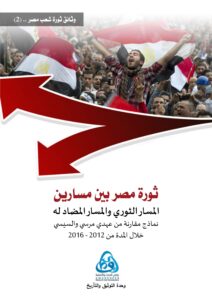
It was no secret that the deterioration of the economic conditions in Egypt before 2011 was one of the most important factors that led to the outbreak of the Egyptian revolution against the Mubarak regime. Therefore, it was not surprising that the economic axis was one of the first things to be considered when studying the reality of the Egyptian revolution and the outcomes of the coup against it in the year 2013, which is what was given attention by the study of the “Waa” Foundation for Research and Development, which was entitled (Egypt’s revolution between two tracks…the revolutionary path and the counter-path: comparative models from the eras of Morsi and Sisi during the period from 2012 – 2016), as it dealt with a follow-up comparison of the process of the struggle between the two paths: the revolutionary path and the counter-path. Through the eras of Morsi and Sisi, which represent practical manifestations of the outcomes of each path. It has become clear that the indicators of economic growth that were constantly announced by the Mubarak regime were false growth. According to the Christoph Ehrhart scale of 2001, which measures the extent of the concentration and penetration of poverty into the economy, the impact on the severity of poverty, and the poverty growth curve; The macroeconomic rate of Egypt in the period from 1990 to 2004 showed that the last ten years of Mubarak’s regime witnessed a significant deterioration. It showed that poverty permeates the Egyptian economy, and that growth benefits only the ruling class and the corrupt class associated with it, and that growth is impoverishing, unfair, and unfavorable to the poor. With the outbreak of the Egyptian revolution on January 25, 2011, the management of the economic file witnessed a state of ambiguity and confusion, a continuation of the previous situation. Some economists noted that many of the economic problems that resulted after the revolution resulted from a state of anxiety and uncertainty after the revolution regarding the political direction of the country, and they expected that handing over power to an elected president would help address this situation, and that actually happened. The day after the announcement of Mohamed Morsi’s victory in the presidency, the stock market index rose by 7.6%, which is the largest increase recorded since 2008. However, with the occurrence of the military coup, the economy began to collapse again, and what the “Waa” study addressed in this aspect was the report issued by The Economist magazine in August 2015 entitled: (The Destruction of Egypt), which is considered one of the alarming reports in describing the Egyptian situation in general, and the economic situation in particular; It linked repression to the flight of capital, the spread of corruption and the erosion of competencies, and the impact of this on the Egyptian economy in the short and long term. It warned the regime of the dangerous repercussions of the continuation of its policies, and even the continuation of Sisi personally in power, so it advised him not to run for another term in the 2018 presidential elections. The magazine pointed out that the Egyptian regime wasted billions of dollars on fake projects, and that Egypt lives on economic aid coming from the Gulf states. Despite this, the economic deterioration continues, and despite billions of dollars from the oil-producing countries, the budget deficit and current account of the Egyptian state are expanding; It amounted to approximately 12% and 7%, respectively, of the gross domestic product. If the foreign exchange reserves by the end of President Morsi’s year amounted to 14.3 billion dollars, the percentage of deposits to foreign countries was approximately five billion dollars, and the rest was self-resources, while the period after the July 3 coup witnessed a fundamental change in this equation. The reserve now stands at 100% of foreign loans and deposits to foreign countries. This is the most prominent example of what Egypt’s economic conditions turned into after the coup.
-
Egypt Revolution: Mohamed Morsi:
The Waaa Foundation study demonstrated the efforts of President-elect Mohamed Morsi to encourage investment and increase economic development throughout Egypt, away from the central areas of Cairo and Alexandria, and highlighted the allocation of 20% of the state’s lands to industrial investment projects affiliated with small and medium-sized companies by providing technical support, training programs and the necessary financing for them. The study says that the Suez Canal axis project is one of the examples of transferring investments outside the central regions and distributing them horizontally across the Egyptian geography. The Council of Ministers expected that Egypt would attract an estimated one hundred billion US dollars and provide a million job opportunities from this project. However, the army leadership strongly opposed the project. Where did the officers realize their marginalization in this giant economic project? Egypt’s foreign debts rose to about $45.5 billion during the era of President Morsi, after it had been $34.4 billion the year before his rule. In contrast, the economic growth rate of the gross domestic product rose from 1.8% to 2.4%, and the results of Morsi’s efforts to develop investments to confront the problems began to appear. The total investments implemented increased from 170.4 to 181.4 billion pounds, and there was a qualitative improvement in the agricultural sector in general, and in wheat production in particular, and the process of storing, marketing, and protecting it from the ravages of corruption, and imports of it from abroad decreased. During the era of President Morsi, the tourism sector witnessed a return to its normal levels with improved expectations regarding stability in Egypt in the first half of the democratic experience. Conditions have developed in this sector, according to a statement by Hisham Zaazou, Minister of Tourism, on May 1, 2013, “with the percentage of tourists increasing by 17% compared to the previous year, and it is expected that their numbers will reach 13 million tourists at the end of the year, a percentage close to their percentage before the January Revolution, when their number was “15 million tourists.”
-
Egypt Coup: Abdel Fattah Al-Sisi
“I will not raise support until I enrich the first people… and tomorrow you will see Egypt… wait two years and you will see the wonder… within a month prices will fall, and the increase in the dollar will not affect them… I will create a road network that will hold Egypt together like this (gesturing with his fist).” These are some of the promises and slogans raised by the leader of the military coup since July 3, 2013, and he did the opposite, as the various economic and living conditions witnessed a significant deterioration since the coup took place. While the Egyptian people’s revolution on January 25 raised the slogan “Live freedom and social justice,” the coup raised the slogans “Everything must be paid” – “Good morning to Egypt with a pound” – “You do not know that we are very poor” – “They entered us into a nation of destitution.” The living crises worsened, and the various economic sectors deteriorated. Examples of this include (2013 – 2016): – Al-Sisi’s government presented an alternative study for a canal development project. Suez, after the coup to branch out the canal, it became clear that it was disastrous due to its lack of comprehensive and sustainable development and its reliance on the rentier view of the canal, and it had no horizon for sustainable development that would benefit the five governorates most in need of development, the governorates of Sinai, Suez, Ismailia, and Port Said. – Raising the prices of various types of fuel more than once by 78% in 2014, then by another 45% in November 2016, and it is expected that the rise will continue. It also raised domestic gas prices more than once in addition to doubling electricity prices in the three years following the coup, and the increases are still continuing without taking into account the situation of the poor. – Low wages. The first post-coup government headed by Hazem El-Beblawi (July 16, 2013 to February 24, 2014) quickly retreated from implementing the schedules prepared in Hisham Qandil’s government by applying the minimum wage. In contrast, the wages of the army, police, and judiciary increased more than once with the successive coup governments. They also received financial privileges and large financial rewards before and after each political entitlement, and on some other occasions, and sometimes on inappropriate occasions! – Exacerbation of unemployment. The continued security unrest and instability of the situation after the July 3 coup further exacerbated the unemployment problem in Egypt. It led to the deterioration of many sectors, most notably tourism, which used to accommodate 4 million workers before the situation deteriorated significantly, especially after the downing of the Russian plane in Sinai (October 31, 2015), in addition to the closure of hundreds of factories and the decline of various sectors. – The exchange rate of the pound collapsed, so the price of the dollar rose to record rates, reaching nearly 20 pounds at the end of 2016 until it stabilized at 17 pounds, that is, an increase of approximately 300%, which exposed… Various economic sectors are at great risk. – Record debts: The Central Bank of Egypt revealed dangerous numbers related to the aggravation of the problem of both domestic and external debt. Domestic debt increased by 5.3% during the first three months of the coup (from July to September) of 2013, and this was accompanied by a jump in the burden of servicing the external debt, which represents the value of the installments and interest due on it, by about 184.8%, during the first quarter of the fiscal year 2016. It is noteworthy that the “Wa’i” study aims to raise awareness of the facts of the conflict between the paths of the revolution and the coup in a language based on numbers and related statistics. In the Egyptian case, it was carried out by specialists in scientific centers, field studies, and summaries of respected international organizations in economics, politics, human rights, and others. The study relied on a group of diverse sources, theoretical and field studies that dealt with the Egyptian situation in all its details during the various stages of the revolution, and included statistics, comparisons and critical analyzes by experts and specialists, including economic reports such as: reports of the Central Bank of Egypt, the World Bank, the European Union, the Economist magazine, reports of the Ministry of Administrative Development in Egypt, the Central Auditing Organization, human rights organizations, the Mobilization and Statistics Authority, documentary reports and periodical books, and analysis of letters and data. Political and economic reports issued by relevant authorities and other sources. To obtain your copy of the study (Egypt between two paths) (Click here)