
Two paths for the January revolution…this is what a macroeconomist predicted
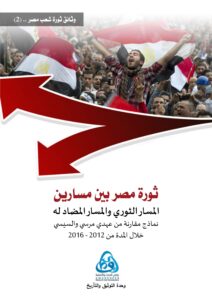
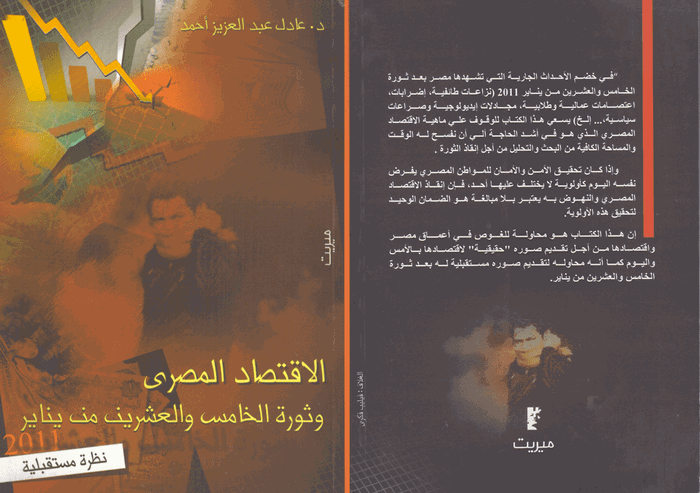 The publication of the “Wa’i” Foundation for Research and Development, which was titled (Egypt’s Revolution between Two Tracks… The Revolutionary Path and the Counter-Track: Comparative Models from the Morsi and Sisi Reigns during the Period from 2012 – 2016) – culminated previous efforts in trying to partially understand the drivers of the imminent revolution, and its consequences after its actual outbreak on January 25, 2011. Among those studies that inspired the “Wa’a” Foundation to build Its last publication was a study issued in 2011, several months after the revolution, by Dr. Adel Abdel Aziz Ahmed, a professor specializing in macroeconomics and a consultant to the European Council. He predicted two paths for the revolution: one was pessimistic about the occurrence of a coup and army intervention, and the second was optimistic about the success of the process of democratizing political life in Egypt in the Turkish manner. His study favored the pessimistic path and the occurrence of a military coup for internal and external reasons… and in the following we highlight We will review this study in some detail because of its importance.
-
The new variable
The study, issued approximately sixty days after the outbreak of the revolution, began by anticipating what the experts had drawn for the revolution regarding the paths of Egypt’s economic future in light of the new change (the January 25 Revolution), and it spoke about two basic paths:
-
Pessimistic scenario:
In its pages from 98 to 110, the study predicted a possible coup against the Egyptian revolution, due to Egypt’s high international and regional sensitivity, which makes it the subject of international and regional polarization, and the sharp contradictions it is full of and the profound erosion of political, social, and economic life over the course of decades, which constitutes the greatest challenges facing the revolution. The bottom line of this scenario is that the anti-revolutionary forces will attack the peaceful, white youth revolution in a bloody and horrific way, destroying all the hopes and aspirations of the Egyptians. The outcome will lead to army intervention and the possibility of a military coup followed by potential violence, and a state of polarization in the national community. He conveyed the warning of experts that this pessimistic path, if it were to occur, would cost Egypt huge losses that could paralyze its economy for about forty years, losing hundreds of billions of dollars, in addition to the possibilities of comprehensive economic collapse and bankruptcy, the possibilities of a decline in Egypt’s political role regionally and internationally, the flight of minds and capital, and the collapse of the Egyptian currency, which could cause harm to three successive generations. The experts explained that this exorbitant tax resulting from the onslaught of anti-revolutionary forces, which they called the “revenge tax,” would not only harm the Egyptian people; Rather, its damage in the short term will fall directly on the people, and in the long term on all state institutions, including the army, police, judiciary, media, and others, and its damage may extend to all of these institutions and to the entire region.
-
Optimistic scenario:
On the other hand, the study, in its pages 111 to 120, predicted the success of the revolution and the launch of the democratic path, but it considered it a weak possibility compared to the previous scenario. Although it remains an issue in future studies, the study showed the potential success case and divided it into two hypothetical stages:
-
The first phase from 2012 – 2016 AD:
The indicators of the success of this path are represented, starting with the shortening of the period of the Military Council’s rule, the absence of a serious division between the factions of the revolution, and the completion of the democratic path with a light revolutionary spirit and profound reformist change. In this case, the Islamists – specifically the party to be established by the Brotherhood – may be the largest organized popular and political force – the party qualified to obtain a majority, even if it is weak. In this case The tax that the Egyptian economy will pay for the democratic transition is estimated at $10 to $15 billion, and they called it the “transition tax.” The study quoted the experts as indicating that, in light of the presence of negative factors in the surrounding environment and serious regional and international challenges, it may be appropriate for the prospective Islamic party to take inspiration from the experience of the Justice and Development Party in Turkey due to the presence of some similarities. Studies were presented on how the party should deal, so the experts indicated the need for the party to be established to quickly study the Turkish experience for similarity in Islamic background, the experience of South Africa in transitional justice, the experience of Eastern European countries in transforming the public sector into a free market economy, and the experience of Malaysia, Brazil is in a societal renaissance. Experts expected that this optimistic phase – if it took place – would end by the end of 2016 AD, and that the Brotherhood would emerge with major political losses that might not enable it to have the same political weight that it could reach in the first experience in the parliamentary councils or the executive authority – if the phase was completed peacefully – which would be reflected in the development of its political performance and its subjection to an internal review process, where it would bear the largest burden of the transition tax and bear all the burdens of the previous stages. Despite the consequences that will befall the Brotherhood, the study predicted that during the first stage of the democratic path, the revolution will gain major points over the latent counter-revolution, and it expects that awareness will deepen, society will feel the value of freedom, experience will mature, horizons of hope will open up for young people, and manifestations of violence will be reduced to a minimum.
-
The second phase from 2016-2020 AD:
The study anticipates that the second stage in the optimistic path will witness the return of Egyptian minds and funds, the flow of investment and tourism, and the consolidation of the rule of law, and that the revolution will make progress in social reconciliation, compensation, and the fight against corruption. This does not mean that the protests will stop or that regional and international troubles will end. The ceiling of demands and expectations from the revolution will be very high. Given the circumstances of the Egyptian situation. This optimistic rise does not mean that the attempts of anti-revolutionary forces to exploit problems and seek to cause sectarian strife may disappear completely. The study predicted that Egypt may be on the cusp of real prosperity in the early twenties of this century, even with the estimated increase in the population between 110 and 128 million people according to both optimistic and pessimistic estimates of population increase. Turkey may even surpass or equal it economically in 2025, although the difference between them seems large, as Egypt’s national product in 2011 amounted to approximately $188.334 billion, while Turkey’s reached approximately $1,118 billion in the same year.
-
Egypt is between two paths
Waei Foundation benefited from the conclusions of the study; In its presentation, which deals with the reality of the Egyptian situation in the form of a comparative study between the attraction of the two paths, through some issues, events and positions that represent standard models for the Egyptian situation before and after the coup, with the aim of providing some revealing glimpses in light of the study’s view of the coup as a stage of the conflict that will continue to appear and disappear until the inevitable change that the Egyptian people thirst for occurs. The study “Awareness” of “The Revolution Between Two Tracks” chose examples from some fields to illustrate the comparison between the two tracks and how they conflict, and the outcome of the results (the field of corruption – the economy – youth – rights and freedoms – women) included in the comparison from 2012 – 2016, which is an illumination for more detailed studies revealing the path of comprehensive and profound change along which the Egyptian revolution is moving. To obtain your copy of the study (Egypt between two paths) (Click here)