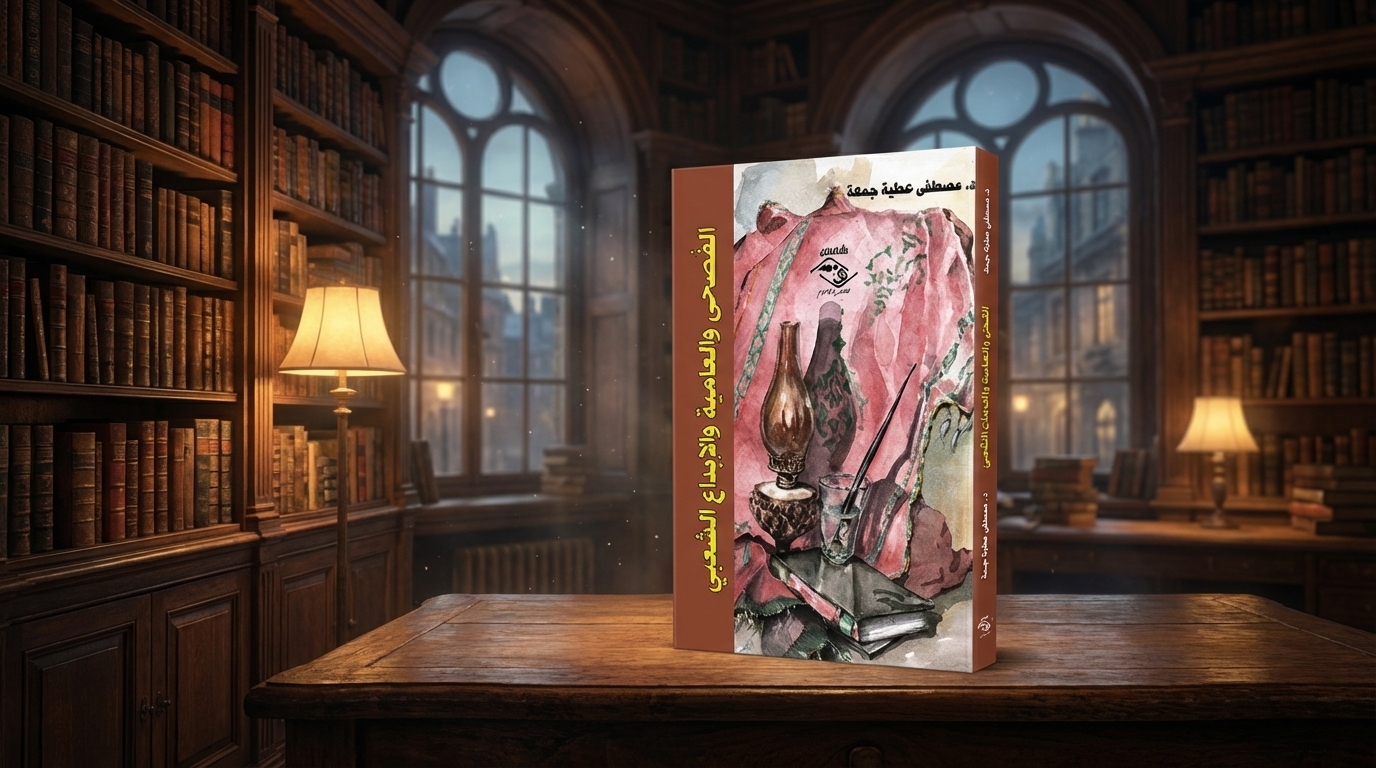
Historical, colloquial, and popular creativity
The book “Classical, Colloquial, and Popular Creativity,” by researcher and critic Dr. Mustafa Attia Jumaa, an academic and literary critic, professor at the College of Basic Education in Kuwait. The book was published by the Shams Publishing and Media Foundation in Cairo. In May 2020, in 292 pages, it contained four main sections, in addition to the introduction, introduction, and conclusion, a number of visions, about the reality of… Arab cultureIn the case of colloquial and classical. The writer sought Chapter oneTo go beyond the traditional discussion, at its lowest level, related to colloquial words, their structures and their relationship to classical Arabic, that is, moving from a circle Language To the circle of ideas and backgrounds, colloquialism is not only a verbal and linguistic issue, but it has its cultural aspects and intellectual references. The focus of the vision that the book carries is the connections between colloquial and classical, given that colloquial is one of the branches of classical, and the problems that result from this, represented by the problem of dialogue in stories and plays.
Preserving the Arabic heritage from colloquialism
This was the issue that was dealt with in the second chapter, entitled: Language Issues in Popular Literature, in Light of Orality and Writing, where it dealt with the matter from the angle of the relationship of orality and writing to popular creativity, and the importance of preserving the Arabic heritage from the colloquial, because it is part of the nation’s memory. As reviewed Chapter TwoThe skills of writing down Arabic oral history, and the importance of that, given that if there is written history, there is an oral history parallel to it, which must be paid attention to, recorded, and studied, so that it becomes a tributary of the nation’s mental, creative, emotional, and intellectual journey. Discuss Chapter ThreeThe issue of identity, reviewing its dimensions and determinants, its relationship with linguistic and ethnic minorities, and its reflection on popular folklore, also discusses a problem branching off from the subject of the book, which is official culture and popular culture. The discussion touched on the so-called elite culture and mass culture, to emphasize the rejection of any cultural dualism, or more precisely the duality that we live in in our intellectual and literary life in general. It is not possible to accept an official elite culture that represents superiority over the mass culture of the people, because the lesson is In culture, it is the expression of its producers, regardless of the means of creativity, whether oral, writing, acting, or singing.
Applied study
As for Chapter FourIt dealt with the aesthetics of popular creativity, through an applied study, entitled The Sea in Gulf Popular Poetry (A Sociological Spatial Vision), and it revolves around the impact of the sea on Gulf popular creativity, and how the sea, as an influential spatial element and a source of livelihood, shaped the relationship of humans to place and time, and this is what Gulf songs and popular poetry in the countries overlooking the Gulf overflowed.
Conclusion of the book
The author states in the conclusion of the book that there is no harm in colloquialism in creativity in all its forms, whether written, visual, or audio, provided that we elevate the dictionary and bring it closer to classical Arabic, and that the Arab creator takes the dimension of Arab identity into account as he formulates his creations, and does not look only at the local recipient. Here, classical Arabic, especially in the dialogue within the novel, appears to be a model solution accepted by all users of Arab culture.