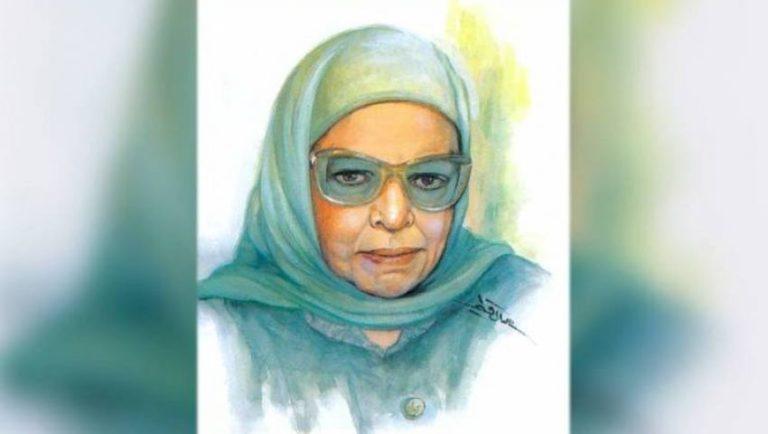
History books often contain a story French campaign For Egypt, but it contains it in a few lines, which does not reveal its reality, or some contemporary thinkers analyze it and present it as a historical, civilizational shift for Egypt, and not a brutal and fanatical occupation! The book we have today, “And the Horses Entered Al-Azhar,” by the Islamic thinker Muhammad Jalal KishkIts first edition was published in Beirut in 1971, then its third edition was published by Dar Al-Zahraa for Arab Information, in 1990, in 529 pages. It does not only narrate the events, but rather analyzes them and supports them with the opinions of historians, or Western and Arab researchers. The book begins with a look at Egyptian society and its relationship with the Ottoman Empire, then enters into the civilizational mission for which Napoleon came to Egypt, and follows it step by step, passing through the cannon, the saw, the revolution, and other elements, events, and personalities, with which history was filled before the pages of this book were filled with them. This valuable book represents a historical reference on which the East can be relied upon and learned through, most notably the thinkers who are proud of this campaign: How did horses enter Al-Azhar?
The beginning… Al-Azhar!
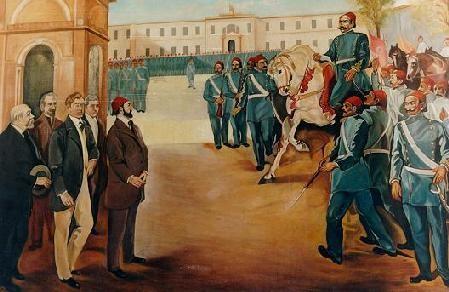
In October of the year 1798, the horses of the French occupation entered Al-Azhar, and Napoleon’s soldiers used the sword to attack the sheikhs of Al-Azhar and the students of science. The books were looted and the manuscripts were torn, then they used the mosque and the university as a horse stable. Until Sheikh Al-Jawhari interceded, and he himself went to Napoleon, requesting that the horses leave Al-Azhar, so that Napoleon could order them to leave Al-Azhar, then he arrested a number of sheikhs and students and beheaded them. This was the first time in the history of Egypt that Al-Azhar was insulted in this way, and its sheikhs were ordered to be executed. It was the first time that Egypt was occupied, and it was the beginning of our era with foreign colonialism. As soon as Egypt fell after the Battle of Imbaba, the occupier came face to face with Al-Azhar, which led a violent resistance, at various levels, from the resistance, led by the senior sheikhs, within the councils formed by Napoleon to rule Egypt, to the violent national resistance, led by the junior sheikhs, with secret movements and acts of popular resistance, and the escalation of the clash that ended with the closing of the doors of Al-Azhar after the killing of (Kleber), at the hands of Suleiman Al-Halabi, one of Al-Azhar’s students.
Al-Azhar…Egypt’s identity
Colonialism was convinced that unless the leadership role of Al-Azhar was liquidated, no colonialism could settle on the banks of the Nile, and this liquidation would not be by closing the doors of Al-Azhar or occupying it with horses, but rather by closing the door to its intellectual leadership of the nation, and alienating the society around it, until it became a backward cacophony, and even a symbol of backwardness and a reason for ridicule and ridicule, and this role was played by the man of Western colonialism, “Muhammad Pasha,” nicknamed “The Great,” the founder of modern Egypt, and its convert, a prey. Powerless to Western colonialism. Muhammad Jalal Kishk’s book, about the Napoleonic campaign against Egypt, revolves around a study of the history of the campaign, and a study of the East’s relationship with the colonial West, which began with this campaign, and chose the entry of horses into Al-Azhar, due to the symbolism that Al-Azhar carries, and because this phrase has an impact that indicates the depth of the defeat that the nation suffered in the campaign, and the military and intellectual invasions that followed it.
French campaign
Kishk began his book by discussing the existence of two schools of interpretation of history, the first of which is the colonial school, which makes the French campaign against Egypt, led by Napoleon at the end of the eighteenth century, the beginning of our national history, and the beginning of Arab thought, that is, the beginning of our liberation from Turkish colonialism and our exit from the Middle Ages. This colonial school relies on several allegations. Among these allegations is the attempt to isolate the French campaign from imperial history, as an isolated event from the relationship between the East and the West, and its connection to the French Revolution, which was spread by Napoleon as he invaded with his armies in the East and West. Thus, dealing with this campaign is dealing with the new revolution at the time, which brought the world out of the Middle Ages. Kishk refutes this claim by returning it to its historical origin. This claim was not common during the era of colonial control, but it is modern influenced by Marxist thought, which the Soviet Union promoted under the pretext of the “internationalist concept” in the communist revolution, that is, the universality of the communist idea, and thus following the communist leadership without national considerations, but this idea fell due to national contradictions. It turns out that a real colonial relationship exists between the larger communist state and the smaller one, and then the communists of the smaller state are relegated to the rank of workers for the larger communist state. Then it is proven, through French memoirs, that France’s seizure of Egypt is part of France’s policy as a state and not a phenomenon linked to the French Revolution, but rather the state’s policy aspiring to control trade in the Mediterranean, which was supervised by Egypt, and with these ambitions it is purely economic, confirming the imperialist character of the French campaign.
Before the law was broken
This chapter begins with the following question: Was Egypt a Turkish colony? Kishk considers it scientific ignorance to describe the Ottoman authority as colonialism, because colonialism is a state of economic development that the Ottoman state did not reach. Some Islamists even wish that the Ottoman state had reached this state, to become an Islamic superstate by modern standards, but this wish is misplaced, because no colonization is possible in an Islamic state, nor were the Turks able to enter the era of imperialism as imperialists. According to the scientific interpretation, it is not possible to call a country that did not achieve its industrial revolution, and whose trade did not constitute any part of Egyptian trade. Rather, it imported from Egypt more than it exported to it, and exported raw materials to Egypt, and Egypt’s exports had manufactured goods, and no Turkish capital or investments in Egypt. There was no Turkish army in Egypt. Rather, the arrival of an Ottoman expedition to Egypt meant war with the Mamluks, and the relationship was limited to sermons to the Sultan and prayers for him in pulpits. The Sultan’s right to appoint the pasha (governor), and the Ottoman Empire’s right to pay the miri (tribute).
Napoleon and the civilizing mission
I will colonize Egypt! This is what Napoleon said frankly. I will colonize Egypt and import artists, workers, actors, and women. Six years are enough to go to India, if things go well. Napoleon spoke explicitly in his memoirs about his plan for the human colonization of Egypt, by controlling the waters of the Nile and achieving prosperity. The population quadrupled, due to the many immigrants from Greece, France, Italy, Poland and Germany. But things did not go as planned by Napoleon, who dreamed of glory like Alexander’s, because the Egyptians, sons of the Islamic nation, rejected Napoleon’s civilizational mission, and knew without much controversy that he was coming (to colonize Egypt), so they resisted this colonization and thwarted it.
Cannon and prism
The third chapter begins by explaining the state of mobilization that took place in Cairo to confront the French invaders, and compares it to the Arab mobilization in the defeat of 1967. All the common people and sheikhs went to Bulaq, where the battle was, to watch it. The price of weapons rose, and the markets and neighborhoods were empty of men, who headed carrying drums and flutes to Bulaq. Then the writer goes on to explain the resistance of the Egyptian people, with its various types mentioned previously, and how they revolted in every region against the French soldiers, before and after their entry into the region. Revolutions after revolutions occurred in the countryside, and in Upper Egypt in the first peasant revolution known to the East. Egypt was virgin, not yet contaminated by Western thought, which is why everyone revolted and rejected the foreign presence, as was the custom. Reprisals began against the invaders, to put down the revolutions, and the Damanhour massacre occurred, in which about 1,500 men and women were killed and burned.
My city revolted
After the occupation of Cairo, the invaders began their mission. They began stealing treasures and crypts from the palaces, bringing servants and engineers, who showed them the crypts in the palaces of their masters. The French began arresting the “unofficial” thieves while they carried out their mission of looting and searching. Cairo revolted – and it was not an economic revolution – food was available, and the revolution was from the common people who did not pay taxes, and it was not a revolution to support the remnants of the Mamluks or the Sultan, and no one from the common people believed in them or tried to help them, but it was a liberation revolution from the colonizer, which is usually described by the invaders as religious fanaticism, and here we fall into this trap, as the writer says, so we try to deny the accusation of religious fanaticism against it, as if the people’s fanaticism towards their religion was something unnatural, and as if resisting the colonizer was a matter. Gay needs justification!
Colonial institutions
In addition to the killing and abuse, Napoleon tried to establish administrative regulations that would ensure the control of the people and regulate the theft of their resources. He worked to establish an office or council of sheikhs, then he asked them to collect heavy taxes from the Egyptians. The sheikhs asked for relief, but the French did not agree and forced them to collect them. The office was an apparatus for collecting taxes and fines, and its other mission was to suppress revolutions and control the people. Kishk points out that the colonial school in interpreting the French campaign sees in the aforementioned office a training for Egyptians in the parliamentary system and an experience of self-rule! Napoleon also established a special council of ministers for Egypt, and appointed a general secretary to the council. Kishk tells the story of Napoleon’s attempt to obtain a fatwa from Al-Azhar ordering the public to take an oath of loyalty to Napoleon, and how the sheikhs of Al-Azhar were confused, then their chief Sheikh Al-Sharqawi stood up and asked Napoleon to declare his conversion to Islam, so that they would follow him and the Arabs after them. The general was astonished by the sheikh’s response. Kishk talks about the idea that Napoleon named his army, which went to occupy the Levant and occupied Al-Arish, Gaza, and Jaffa, called it (the Army of Egypt), in an attempt to isolate Egypt from the rest of the Islamic countries, as if the Egyptians would be deceived and rejoice in the victories of the occupation forces, because the name of the army was (the Army of Egypt)!
The eternal revolution
The Second Cairo Revolution broke out after the agreement was broken between the English and the Turks with the French, which stipulated the evacuation of the French from Egypt, after Napoleon’s return to France, and Kleber assumed command of the occupation army in Cairo. However, the agreement failed and Kleber attacked the Ottoman army, which approached the shores of Egypt, based on the agreement, defeating the Ottoman army in a few hours. Kleber returns to Cairo and finds it a city ruled by revolutionaries, and he needs a full month of battles, burning, and bombing, so that he can enter it again on the piles of corpses and ashes. In this chapter, Kishk began to deny allegations of sectarianism, brought about by the Second Cairo Revolution, which was the result of the policies of the French, which drove towards inciting strife and the interventions of French agents, and denied what the revolution was accused of of demagoguery and chaos, which is a natural thing in revolutions in general, even in the French revolution, which was the most demagogic revolution.
The lemon crushed the Sharbatly
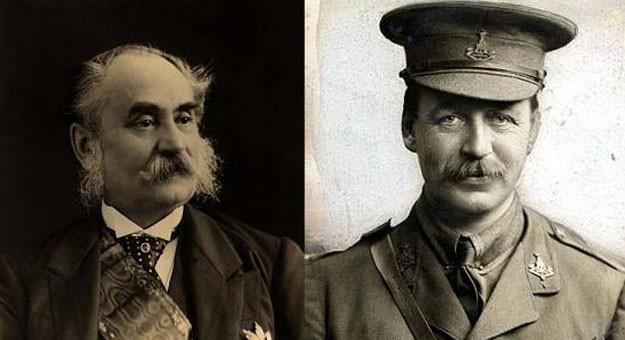
After Kleber oppressed the Egyptians by killing, burning, and captivating them, and after he squeezed the country “like Sharbatly squeezes a lemon,” as he described it, bankrupting it with fines, and after he sowed the hatreds that tore apart the unity of the nation, he thought that the “squeezed lemon” had lost its ability to live, and then the lemon squeezed him and threw him into the yard. On the twenty-first of June 1800, a rare and strange incident occurred. A boy from Aleppo, the age of a rose, no more than 24 years old, was able to kill Kleber, the commander of the French occupation in Egypt, as an example of the Islamic Mujahid, and to consolidate the true meaning of united Islamic unity, despite attempts at division and division. Kishk narrates how Suleiman went to Al-Azhar, the center of the revolution, and was captured by a cell of Syrians there. Whether he came under the guidance of the revolutionary organization outside Al-Azhar, or whether those in Al-Azhar caught him and took advantage of the lack of control over him, because he was coming from outside Egypt, and therefore outside the eyes of French agents, who constantly write reports about Al-Azhar and its students, the result is the same. Kishk mocked the mock court, which France had prepared for Suleiman Al-Halabi and his companions, which responded to the claim and then sentenced Suleiman to have his right hand cut off and be impaled, then remain on the stake until the birds eat him. This court of freedom was the product of the glorious French Revolution, and Kishk was mentioned in the Justice of Muslims, in the story of the trial of Ibn Omar ibn al-Khattab, because he killed three of the Magians, after the martyrdom of the Commander of the Faithful, in a Jewish-Persian conspiracy, and how he was brought to justice, and then pardoned by the families of those killed.
Praise be to God
Kishk followed the chaos that followed the assassination of Kleber, the chaos within France’s ranks, and its recent attempts to form a sectarian office, excluding as much as possible the sheikhs of Al-Azhar and Shawam, and other attempts, until France became bankrupt and its civilizing mission went bankrupt, and they left the lands of Islam humiliated. In the conclusions of the book, he continued the intellectual storms that followed this incident in contemporary Arab thought, in the theses of Al-Tahtawi, Al-Afghani and others, and concluded by talking about the stage of “Islamic awakening” in Arab thought, which followed the defeat of nationalism and its thought in the 1967 war, the awakening that adopts the civilizational formula of Islam, which accepts all religions, sects and races in the East, for Islam is history, culture and identity card, and it is the civilizational choice. The only one, the awakening that will lead to the liberation of Muslims and the glory of Islam.