
Blue Nile State is one of the southern states according to the division of Sudan after the south’s secession in 2011. It is bordered to the north by Sennar State, to the east by Ethiopia, and to the west and south by the state of South Sudan, its capital is Al-Damazin. The state was demarcated in February 1994..
Her name quickly appeared on news platforms last month after the state announced the destruction of more than 600 homes in the neighborhoods of the city of Bout as a result of the sudden collapse of the Bout Dam on the Blue Nile, following the sudden collapse of the dam, which is used to store about 5 million cubic meters of water coming from the valleys of the Anqasna Mountains..
The water surrounded 600 families in the neighborhoods, making it impossible to reach them, and flooded the area from 3 directions. Massive torrents also swept areas of northern Sudan, resulting in the collapse of dozens of homes, without an immediate official announcement regarding the toll of losses..
State history
The area, where “Bout Dam” represents the backbone of life, includes a large market and more than 9 basic education schools. Throughout the war, it remained a safe haven for displaced people from all parts of the state, whose population is estimated at about 618,029 people in 1999. They belong to various Sudanese tribes.
The state is administratively divided into 7 localities: Al-Damazin (the capital), Al-Rusairis, Bao, Al-Karmuk, Al-Tadamon, Qassian, and Wad Al-Mahi. The first governor of the state was Abdullah Abu Fata Abdullah, from February 1994 to December 1997, and it is currently administered by Yahya Muhammad Khair since February 2019..
Naming and location
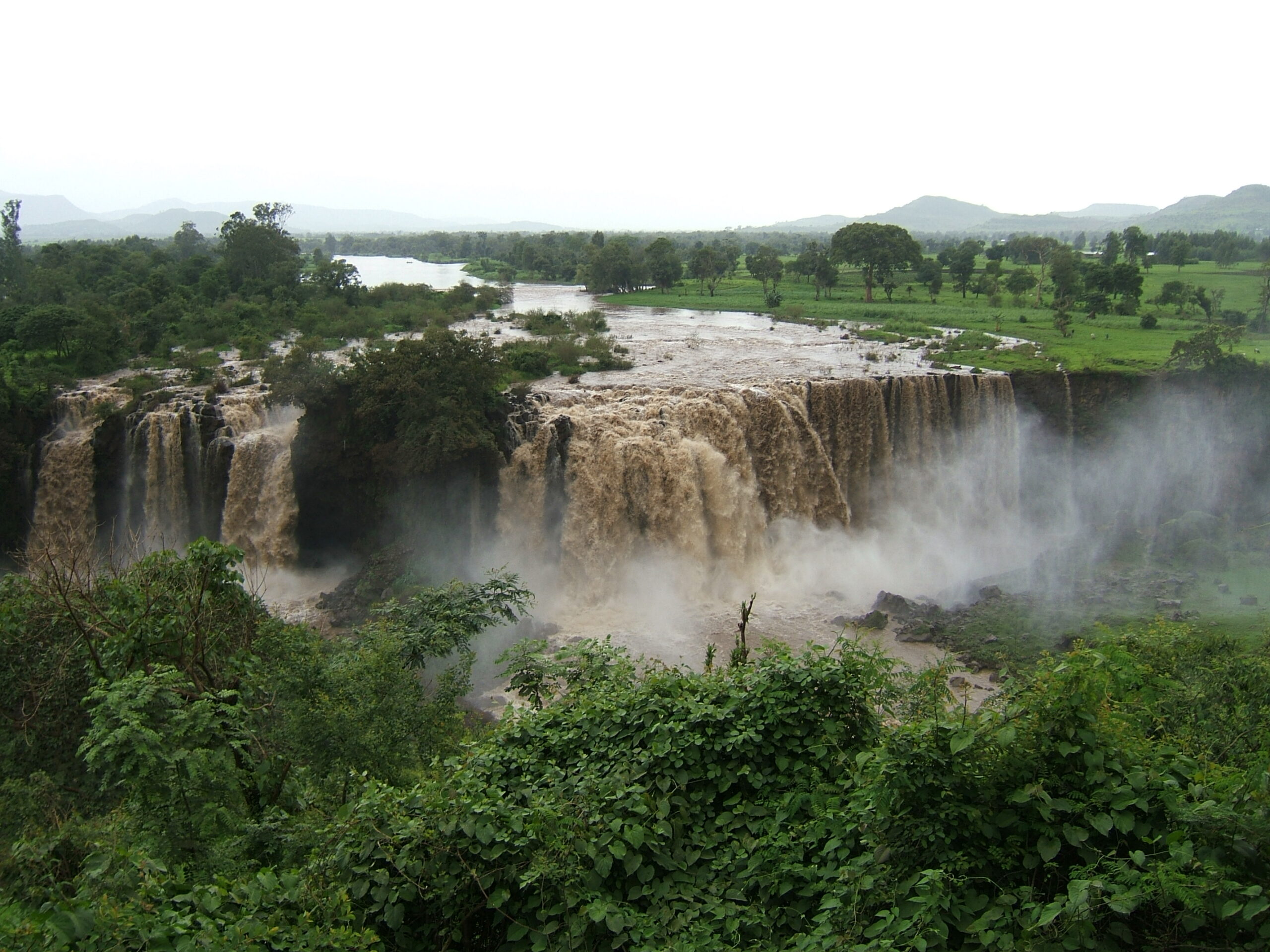
The state derives its name from the Blue Nile, which constitutes 85% of the water feeding the Nile River, but this water reaches it only in the summer after the seasonal rains on the Ethiopian plateau, while in the rest of the year it does not constitute a large percentage, as the water in it is weak or almost dry..
This river originates from Lake Tana, located in the highlands of Ethiopia in the east of the continent. While it is called the Blue Nile in Sudan, in Ethiopia it is called “Abbey”. Bearing its Sudanese name, this Nile continues along a path of 1,400 km until it meets the other branch, the White Nile, to form together what is known as the Nile from this point until the mouth in the Mediterranean Sea..
Major cities
Al-Damazin is the capital of the state. It is a city located in southeastern Sudan on the west bank of the Blue Nile River, at an altitude of 492 meters above sea level. It is about 300 kilometers away from the capital, Khartoum, and it is the capital of the Blue Nile State. It arose and developed with the construction of the Roseires Dam in Sudan, and is located in the middle of an area with environmental, climatic and population diversity..
Al-Damazin grew up in the middle of a forest that was teeming with various types of wild animals and rodents, and it was given the name “Amazinq,” which is a word that means mice in the language of the Alberta tribe, which constituted the majority of the region’s population. It was named because of the large number of mice and rats in it. Over time, the name changed to Amazin or Damazin, and then finally Al-Damazin. There is another narration that holds that the word is a corruption of the phrase “this is what is beautiful” in the Sudanese Arabic dialect, in reference to the ruggedness of the place..
Long history
Although the region in which the state arose is famous for its ancient history, as it constituted the southern border of the ancient Kingdom of Meroe, and part of the medieval Kingdom of Sennar, it is considered one of the newly established states, as it was established as a camp for workers, employees, and engineers working in the Roseiris Dam construction project in 1960 AD..
To this day, the buildings built by the Italian company implementing the project are still standing in the center of the current city, including the hospital, the police station, some schools and other government facilities..
The state developed into an urban settlement when workers from various regions of Sudan flocked to it to work on the dam project, and it continued to expand and expand with the arrival of a second wave of immigrants in large numbers from other areas of the Blue Nile State for security reasons. Since the nineties.