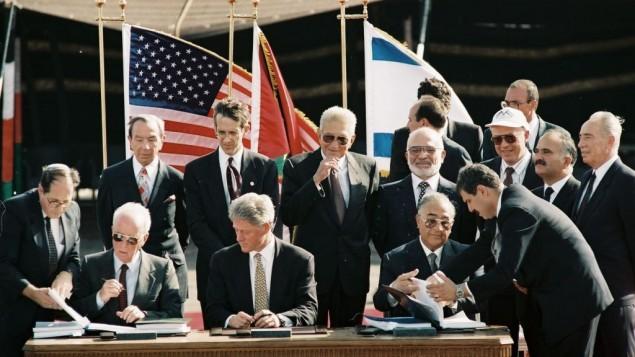
At a time when the Axis powers are accelerating Normalization Led by the UAE, in demonstrating its celebration of establishing relations, at all levels, with the Zionist entity, the features of a second axis were formed, which refused to clearly announce its rejection of any normalization process taking place between the Arab countries and the Zionist occupation. In this report, the Waei Foundation for Research and Development reviews the most prominent official positions issued by the ruling regimes in Arab and Islamic countries:
Qatar: Normalization is rejected
Qatar has confirmed that it will not establish diplomatic relations with Israel before resolving the conflict with the Palestinians. Lulwa Al Khater, Assistant to the Qatari Foreign Minister, said in an interview with the American Bloomberg Agency that normalization with Israel cannot be the solution to the Israeli-Palestinian conflict, but rather the solution lies in implementing Security Council resolutions, granting the Palestinians their rights and finding a just solution to their issue. The Qatari official added that the essence of the conflict is related to the harsh conditions under which the Palestinians live, as a people without a country, living under occupation (Israel). She explained that her country did not believe that normalization was the core of this dispute, and therefore it could not be the solution, without other details. The Emir of Qatar, Sheikh Tamim bin Hamad Al Thani, met with Jared Kushner, senior advisor to the US President, and his accompanying delegation in the Qatari capital, Doha, and confirmed to him Qatar’s position, which calls for a just settlement of the Palestinian issue, on the basis of international legitimacy resolutions, the Arab Peace Initiative, and on the basis of the two-state solution, in a way that achieves security and stability in the region.
Algeria: Palestine is our cause
Algerian Prime Minister Abdelaziz Djerad said, on Saturday, December 11, that there is a real foreign will for “Zionism” to reach his country’s borders, calling on the political class and elites to unite and work to stabilize Algeria. Djerad added, while supervising a historic symposium, on the occasion of commemorating the 60th anniversary of the demonstrations of December 11, 1960, demanding Algeria’s independence from France, that “Algeria is being targeted, and that there are serious issues in our regional surroundings, that want to undermine the stability of the region, and here are the evidence today, when we see in the entire Maghreb and African space surrounding Algeria, there are dangers, instability and wars.” The Algerian Prime Minister said, “There is a real foreign will today, for the Zionist entity to arrive near our borders. The political and cultural class must work to stabilize the country,” referring to the normalization of relations between Morocco (Algeria’s western neighbor) and Israel.

Tunisia: Not interested in normalization
Tunisia said that it is not interested in normalization with “Israel,” stressing that its position is not affected by international changes, in its first comment, following Morocco’s normalization of relations with the Israeli entity. The official Tunisian response came in response to the New York Times, which quoted sources close to the American administration as saying that Tunisia and the Sultanate of Oman may be among the countries that will join the ranks of the normalizers. The Tunisian Ministry of Foreign Affairs said, “While Tunisia respects the sovereign positions of various countries, it confirms that its position is firm and principled, and will never be affected by changes in the international arena.” She added that the position on normalization stems from the will of the Tunisian people, and expresses their feelings of solidarity and absolute support for the legitimate rights of the Palestinian people.
Pakistan: Israel is an enemy
The Pakistani Foreign Ministry announced that it had made clear to the UAE its position of refusal to recognize Israel until a permanent and tangible settlement of the Palestinian issue is reached. This came in a statement by the Pakistani Foreign Minister, Shah Mahmood Qureshi, during a press conference in the city of Multan, northeast of the country. Qureshi said, “I made clear to the Foreign Minister of the United Arab Emirates categorically, Pakistan’s position on Israel, and that we have not and will not be able to establish a relationship with Israel until a tangible and lasting solution to the Palestinian issue is reached.” The Pakistani minister’s statements came just one day after his visit to the Emirates, which many considered decisive, amid rumors that Islamabad had secretly sent an envoy to Tel Aviv. Islamabad has already denied these reports, most of which came from Israeli media. It is noteworthy that last September, Israel signed an agreement to normalize relations with the UAE and later with Bahrain, and Khartoum announced the following month its agreement to normalize relations with Tel Aviv, and Morocco announced a similar step last December.