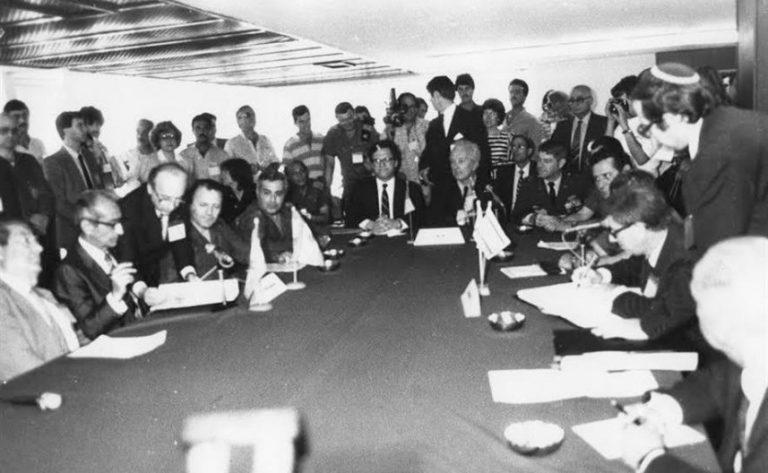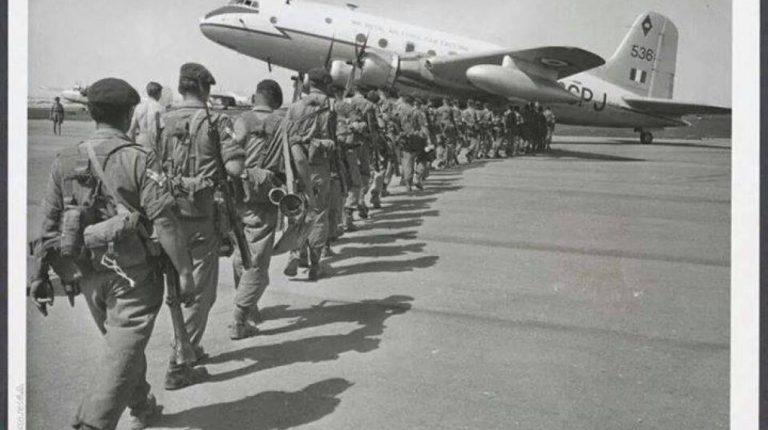

The First Geneva Convention for the Amelioration of the Condition of the Wounded in Armies in the Field, signed in 1864, is one of four treaties of the Geneva Conventions, which is the first international agreement of its kind that regulates the conditions of sick and wounded members of armed forces during armed conflicts and wars..
Its work is closely linked to the International Committee of the Red Cross, which defines the Convention as “the basis upon which the rules of international law protect the victims of armed conflicts.” It was significantly revised and replaced by the 1906 version, then the 1929 version, and then the First Geneva Convention of 1949..
Date of appearance
The idea of the agreement was proposed in 1864 at a critical period in European political and military history. On the one hand, the American Civil War had been raging since 1861 and the Battle of Fort Sumter involved 750,000 people. On the other hand, there was the fall of Napoleon I in the Battle of Waterloo in 1815 and the rise of his nephew in the Italian campaign in 1859..
The agreement worked on formulating a set of laws governing the treatment and care of wounded soldiers. Prisoners of war began to witness activist Jean-Henri Dunant providing relief to participants in the Battle of Solferino in 1859 between the French and Austrian armies in northern Italy, where about 40,000 soldiers suffered due to the lack of medical aid..
Upon his return to Geneva, Donant published a memorial through his membership in the Geneva Public Welfare Society in which he urged the call together for an international conference, which soon contributed to the founding of the International Committee of the Red Cross in 1863, from which the call was made to sign the convention, on August 22, 1864..
Signatories
The signing of the first Geneva Convention of its kind was limited to some of the major European powers that controlled the battlefields in 1864, and included: the Grand Duchy of Baden (now Germany), the Kingdom of Belgium, the Kingdom of Denmark, the Second French Empire, the Grand Duchy of Hesse (now Germany), the Kingdom of Italy, the Kingdom of the Low Countries (now the Netherlands), the Kingdom of Portugal, the Kingdom of Prussia (now Germany), the Kingdom of Spain, Switzerland, the Kingdom of Württemberg (now Germany), and the union between Sweden. And Norway.
Terms of the agreement
This long treaty (64 articles) protects soldiers incapacitated in battle due to illness or injury, as well as members of the medical and religious services and civilians in the battle area. Among its provisions Home:
- Wounded soldiers and patients outside the battle should be treated humanely and should not be tortured or subjected to biological experiments..
- Sick soldiers should be collected and cared for even if they are considered prisoners of war.
- Parties to a conflict are obligated to record the identity of those killed and wounded and to transmit this information to the other party.
- The International Red Cross “or any other impartial humanitarian body” is authorized to provide protection and relief to wounded and sick soldiers as well as members of the medical and chaplaincy services..
Indeed, the agreement effectively contributed to the protection of thousands of injured and wounded during the European war, and there are currently 196 countries party to the Geneva Conventions of 1949, including the entire 22 Arab countries..
To view the full text of the agreement translated into Arabic, please visit: Here.