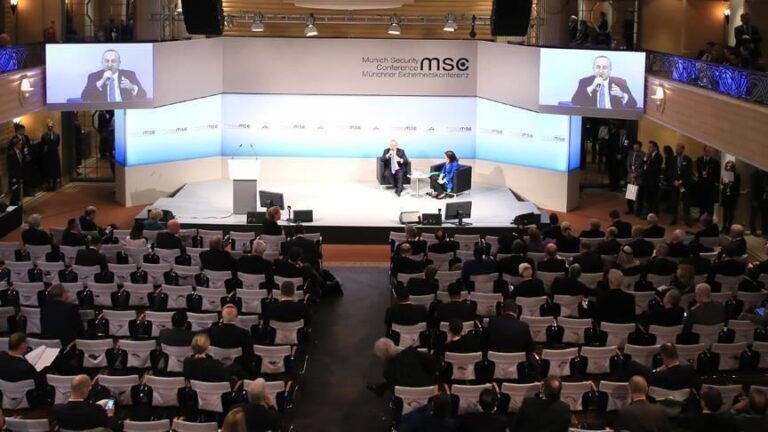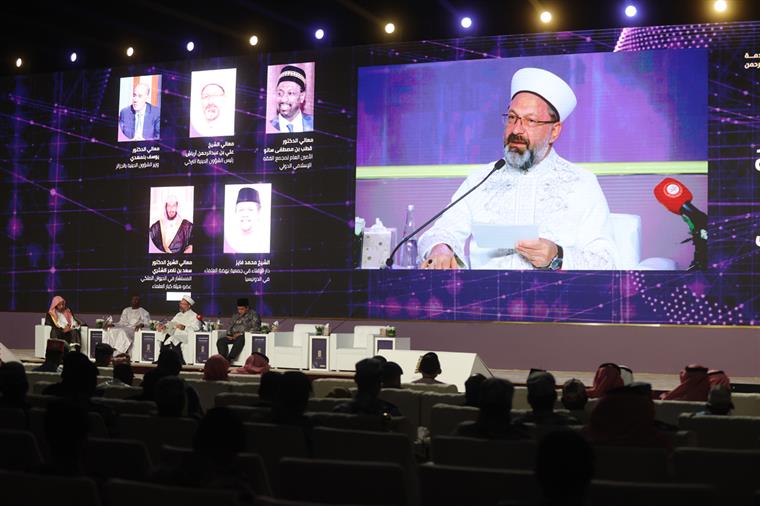

Language is the vessel of thought, and the most important tool of communication between human beings, regardless of their races and affiliations, whether intellectual, ideological or ethnic. There is nothing more comprehensive and expressive of the human condition, or more capable of formulating a vision, or determining the essence of things and describing them, than language, which is before and after that a tool for thinking. When a person thinks about an issue, he thinks in language and vocabulary. Language is the primary expression of ideas, and we judge a person’s thought through his linguistic speech or writing. It is also a tool for controlling and directing the masses politically, medially, and economically. In light of this, the historic Egyptian city of Luxor hosted, on March 3rd, over the course of 3 days, the first edition of the international conference: “Language is the Bridge of Communication between Cultures,” with the participation of researchers from Germany, Italy, Brazil, Palestine, and Iraq. The conference emphasized that language is the bridge and crossing through which the culture of one nation is transmitted to another, and that this happens through translations in all their forms, linguistic contact, learning languages, and the spread of cinema, and the matter has increased in the era of globalization. The world has become a small village, and the spread of the Internet and the diversity of social media has helped it act as a quick and immediate medium for parts of the world to meet and communicate with each other. The conference raised the topic of language as a bridge of communication by presenting topics for discussion, meeting ideas, and coming up with a clear vision and description of language as a bridge for communication between cultures, while developing plans and topics for ways to solve communication problems between languages and working hard and together in order to reach a better level of linguistic communication. The conference included several topics, as follows:
- Textology and cultural juxtaposition.
- Discourse analysis and writing across genre.
- Teaching languages to non-native speakers.
- Comparative literature studies are a link between cultures
- Is the language of international politics a bridge of communication or wars of words?
- The linguistic conditions of refugees in the wake of revolutions and their role in integration into new societies.
- The role of computational linguistics in avoiding misunderstanding in cross-cultural communication
- Arab-Arabic communication: the controversy of classical and colloquial Arabic.
- The role of language in cross-cultural communication in the media (social media)
- Translations of the Holy Books and bringing people together.
- Literary translation and transmission of customs and traditions.
- Scientific translation and transfer of experiences
- Body language and social communication between peoples
- The language of art (plastic / music / cinema / sculpture)
- The language of the following generations of Arab immigrants in the West is between two identities.
The conference reviewed these themes for several languages, first and foremost Arabic, followed by English, French, German, Italian, Chinese, Russian, and then Spanish. The conference concluded with the necessity of presenting modern studies in the fields of linguistic studies and intercultural communication as a basis in today’s business world. He also pointed out the need to address studies of discourse analysis and Arabic studies for non-native speakers, as well as comparative studies between Arabic and other languages, and the reality of Arabic studies in other linguistic departments and in European universities. Translation studies and its history, translation of Arab thought into other languages, problems of translation into Arabic, and comparative literature studies between Arabic literature and foreign literature.