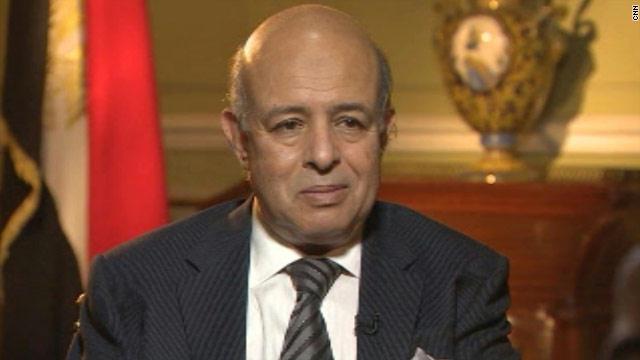
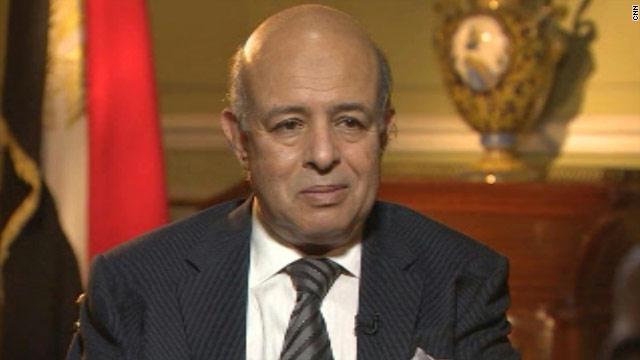
“Praise be to God that I have been accused of collaborating with those who resist the enemy… It is an honor for any Egyptian to have this accusation at the hands of a regime that exercises rule sitting on the lap of the Zionist enemy.”.. History has immortalized these words with which Ambassador Mohamed Rifa’a Al-Tahtawi began his obituary in the funeral pavilion, with the “calf” in his hands and dozens of Interior Ministry personnel scattered throughout the commode, on the twenty-third of December 2015. Mohamed Fathi Rifa’a al-Tahtawi is the eldest grandson of one of the most famous and greatest leaders of the Arab Renaissance in Egypt, Rifa’a Rafi’ al-Tahtawi, who was famous for his mission to France and the author of the book “Takhlis al-Ibriz” in “Talkhis Baris.” Al-Tahtawi assumed the presidency of the Office of the Presidency of the Republic by decision of the late President Mohamed Morsi on Wednesday, August 9, 2012, in a position worthy of one of the most experienced diplomats in the cabinet of the Ministry of Foreign Affairs. His grandfather, Sheikh Rifa’a al-Tahtawi, was the leader of the scientific renaissance during the era of Muhammad Ali, and the family continued to uphold their grandfather’s will regarding renaissance and enlightenment.
Long history
Al-Tahtawi was known by all factions for his diplomatic courtesy. Al-Tahtawi served as Egypt’s ambassador to Libya and Iran, the position of Assistant Minister of Foreign Affairs for African Affairs, and then Dean of the Diplomatic Institute. Former Egyptian Foreign Minister Ian Mubarak chose him, Amr Moussa, to head the Egyptian diplomatic staff in the Iranian capital, Tehran, after he had worked in Brussels during the most difficult period in the history of relations between Egypt and Iran after the Islamic Revolution in 1979. But Al-Tahtawi was able, thanks to his diplomacy, to mobilize the Iranians in favor of rapprochement between the two countries, and during that period President Muhammad Khatami was ruler of Iran, and Al-Tahtawi succeeded in establishing strong diplomatic relations with the Iranian president in light of the Diplomatic skirmishes between the two countries, which Al-Tahtawi was able to resolve in favor of the Egyptian side.
Honorable positions
Al-Tahtawi was not just an employee or official in the Presidency of the Republic, but he was one of the people of thought and opinion in the system of rule of the late President Mohamed Morsi, and his position during the January revolution was very honorable, when he left Al-Azhar Al-Sharif, which was the official spokesman for Al-Azhar, so he resigned and joined the masses of revolutionaries. Advisor Al-Khudairi says in an article in Al-Masry Al-Youm newspaper: “Our regular meeting was in Tahrir Square during the January 25 revolution, and when I saw him, and at that time he was an advisor to the Sheikh of Al-Azhar, I said to him: Are you here in person or a representative of Al-Azhar? He said to me, ‘I am here in person, and I have resigned from my position in Al-Azhar, so as not to cause embarrassment to the Sheikh and the sheikhdom.’”
The Egyptian Al-Watan journalist describes him by saying, “His personal makeup is conservative and not devoid of emotion. He is mild-mannered, capable of clashes, and knows how to weigh his words and the messages he sends.”
Behind bars
Ambassador Al-Tahtawi, like any official in the regime of the late President Mohamed Morsi, was not accused in an ethical or financial case. Rather, he is being tried in the case of “collaborating with Hamas and Qatar,” along with the late President Mohamed Morsi, and 10 other leaders and members of the Muslim Brotherhood, in addition to other fabricated charges. He is currently in Scorpion Prison. His wife, Mrs. Magda Abu Bakr Azzam, narrates the details of her visit to her husband, describing what she saw during the visit as including “humiliation,” attempts at humiliation, and financial pressure to which the wives, children, and mothers of detainees in that cemetery are exposed.
She pointed out that the trip begins a night before; They come to sleep in front of the prison door to secure an advanced place in line. The number of visitors to Scorpio is limited each time from 30 to 50. While the inmates reach 1,500 detainees. She said: We stand in a line between cement blocks, the width of the corridor does not exceed a meter, and the length of the block is a meter. Where hundreds of women stand, the children are there either from the previous night, or from five in the morning. She points out that the door was supposed to be opened at six o’clock, but it was never opened at this time, in addition to the delay of the woman inspection worker, and when the door of the “cave” opens, disaster strikes; There is an intense stampede to reach the door, accompanied by the screams of “dying” children, and women trying to jump over the detention, to advance, quarrels break out between the women, and the senior officer arrives, who swears to God that if the women do not organize, no one will be admitted. Upon entry, Ambassador Rifa’a Al-Tahtawi’s wife indicates the beginning of the second phase. Where visitors heading to the five prisons located in the same place gather, and the stampede begins again when the name of the prison is called; “As for us, the visitors of the Scorpion prisoners, before he lets us go to ride the ‘Al-Taftaf’, he must make sure that our name is on the list in which our names were recorded upon entering the gate.” Then she explains the third stage of the humiliating visit journey, saying: “It is now nine o’clock, and it begins with the bone-crushing journey of the infantry, then we arrive to stand in line to receive the ID cards, and we wait until the first group of names is called, which does not exceed four or five, and you wait until they leave for another group to enter, and when the name of our guest is called, it is 11:30, and after we have been searched a second time. As for the fourth stage of the visit, it is summed up by Abd al-Rahman Pasha Azzam’s granddaughter. She said: “The waiting begins in a large hall, and we wait for the officer to appear with the examination, and he calls the names according to the oath; From Isaiah 1 to Isaiah 4, when our name is called, we go to the last waiting room at one-thirty in the afternoon, and we wait and wait; Because one or two families enter at a time, and after the visit we go to wait for Al-Taftaf to take us outside. It is past two-thirty, completing the ten-hour journey for a visit that did not exceed a few minutes.