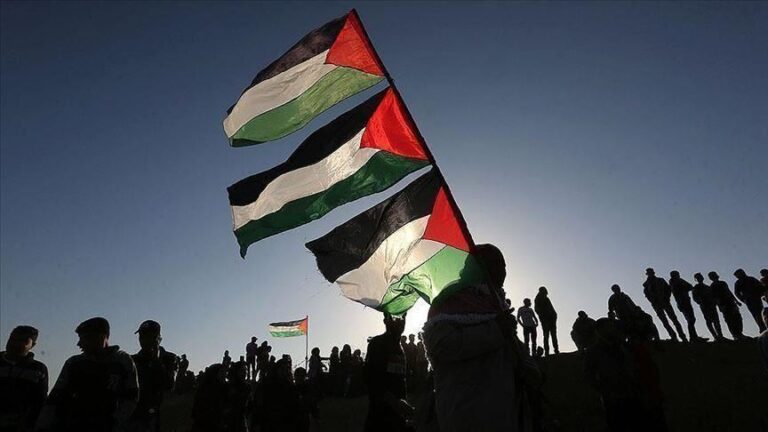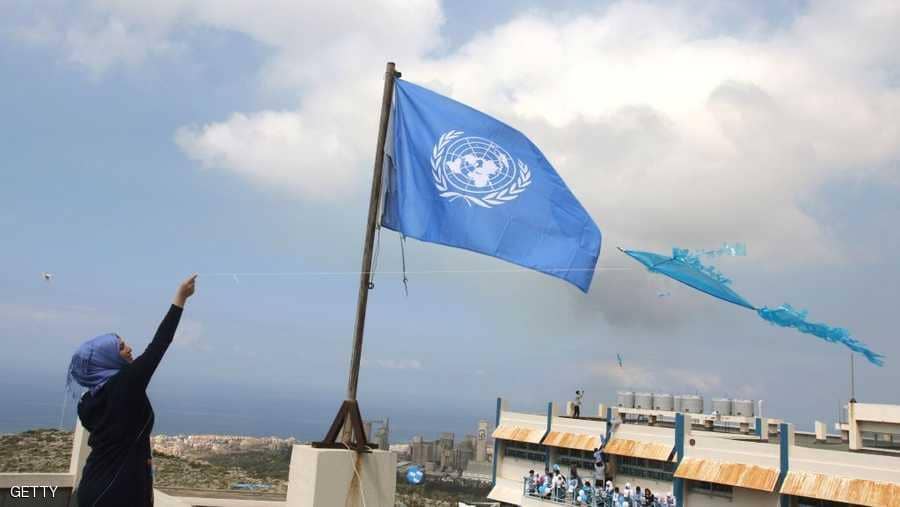
The 1948 war between the Arabs and Israel left an unprecedented refugee crisis, due to the major encroachment committed by Israel since the end of that war, which came as a response to the declaration of its establishment as an independent state on the occupied Arab lands. Under those circumstances, the United Nations established an organization called the “United Nations Relief for Palestinian Refugees” in November 1948. Although the organization did not aim to solve the refugee problem or restore their rights once and for all, it remained one of the most effective initiatives to provide aid. for Palestinian refugees and coordinating the services provided to them by non-governmental organizations and some other United Nations organizations. UNRWA’s tasks include implementing direct relief and employment programs in cooperation with local governments, and consulting with concerned governments regarding the implementation of relief and employment projects and planning in preparation for the time when these services are no longer available.
Establishment and start of work
On December 8, 1949, pursuant to General Assembly Resolution No. 302, the United Nations Relief and Works Agency for Palestine Refugees in the Near East (UNRWA) was established to operate as a dedicated and temporary agency with its headquarters in Vienna and Amman, with its mandate renewed every three years until a just solution to the Palestinian issue is found. UNRWA began operations on May 1, 1950, taking over the functions of the previously established relief agency and receiving Palestinian refugee records from the International Committee of the Red Cross.
UNRWA financing and expenditure
UNRWA is funded by voluntary contributions from donor countries. The largest donors to UNRWA are the European Commission, the United Kingdom, Sweden and other countries such as the Arab Gulf states, the Scandinavian countries, Japan and Canada. UNRWA’s services cover Palestinian refugees residing in its five areas of operations: the West Bank, Gaza Strip, Lebanon, Jordan and Syria, who number 3.8 million refugees according to 2001 figures. UNRWA’s funds are spent 54% on education programmes, 18% on health programmes, 18% on joint services and operational services, and 10% on relief programs and social services.
Palestinian refugee according to UNRWA
UNRWA defines a Palestinian refugee as a person who resided in Palestine during the period from June 1, 1946, until May 15, 1948, and who lost his home and livelihood as a result of the 1948 war. Accordingly, the Palestinian refugees who are entitled to receive assistance from UNRWA are those who meet the above definition, in addition to their children.
The difference between UNRWA and the High Commissioner
UNRWA’s responsibility is limited to providing services to one group of refugees, namely Palestinians residing in its areas of operations, while the United Nations High Commissioner for Refugees is responsible for refugees around the world. UNRWA is charged with providing humanitarian aid to Palestinian refugees, while the High Commissioner is charged with providing international protection for refugees under its jurisdiction and finding permanent solutions to their problem with the help of governments.
The American war on the agency
In August 2018, the US State Department announced the cutting of US funding to the United Nations Relief and Works Agency for Palestine Refugees (UNRWA), after it was its largest funding body. US State Department spokeswoman Heather Nauert said in a statement that the US administration “carefully reviewed the issue and concluded that the United States will not provide additional contributions to UNRWA.” She considered the agency’s business model and management of its financial affairs “an irreparably flawed process.” Foreign Policy magazine quoted informed sources that US President Donald Trump took the decision to cut funding after pressure from his advisor and Jewish son-in-law Jared Kushner and Secretary of State Mike Pompeo.