The largest academic and scientific database in the Arab world (Ma’rifa for Arab Academic and Research Journals) launched the first measure of its kind for the Arab academic product according to international standards, and named it the Arab Citation and Impact Factor (ARCIF) initiative.
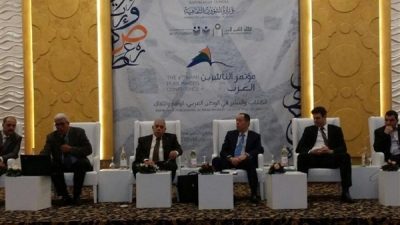
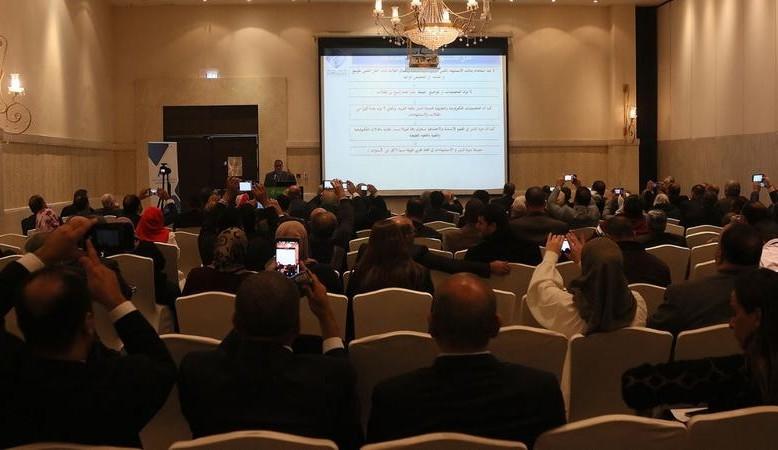
The initiative was launched on Sunday, December 16, 2018, during a symposium and announcement ceremony in the Jordanian capital, Amman, where it presented the Arab Citation and Impact Factor (ARCIF) as a huge step in rehabilitating the Arab academic knowledge and research structure.
The founder and head of the initiative, Prof. Dr. Sami Al-Khazandar, in a statement, said that launching the Impact and Citation Factors for Arab universities constitutes a first step to restore respect for the Arab scientific and knowledge product, after it was an urgent necessity in light of the divergence of research agendas and the decline of the Arab presence in the global scientific scene.
Al-Khazandar stated that the ARCIF factor is a regional standard with global standards, capable of measuring the relative importance of scientific and academic journals issued by Arab universities and scientific bodies, whether in Arabic or in Arabic and another language.
Dr. saw. Al-Khazandar said that ARCIF offers a solution, based on scientific standards, to the problem of the existential, cognitive and cultural marginalization of the Arab academic product, resulting from the dominance of two Western institutions (the name of the two institutions and nationality is required, with links to their websites activated), essentially, over international classification standards and indicators for measuring published scientific production.
In a symposium organized on the sidelines of the announcement ceremony entitled Improving the Ranking of Arab Universities in International Rankings, Al-Khazandar presented visions of what the academic reality will be like following the launch of ARCIF laboratories, whether in terms of restoring the Arab scientific product and its role in the nation’s overall landscape, or in terms of redefining Arab knowledge.
He said that one of the challenges facing the Arab academic effort is the lack of confidence in what we produce, which required a mechanism to evaluate and measure it scientifically and in accordance with followed international standards, which is provided by the ARCIF Laboratory.
In turn, the Assistant Secretary-General of the Association of Arab Universities, Prof. Dr. Khamis Hamidi, in a speech during the symposium, said that efforts to create academic measurement indicators constitute a basis for improving the level and ranking of Arab universities globally, which is something called for by academic necessity.
And Dr. explained. Hamidi said that the Arab Citation and Impact Factor (ARCIF) initiative has raised hopes for an Arab addition to the global humanitarian effort, according to strict standards, and comes at a time when academic institutions and their employees are in dire need of this type of standards, to improve their ranking on international indicators, and among their global counterparts.
As for the Vice President of the University of Jordan, Prof. Dr. Ahmed Majdouba, in his review of ARCIF Laboratories, focused on measurement mechanisms and their importance in evaluation. He said that classifications have become a reality and an indicator of the quality of performance, while acknowledging their impotence in the face of the total effort expended in Arab academic institutions, but this does not detract from their absolute importance.
Dr. saw. Majdouba said that what worries Arab universities is the absence of the Arab product from view. The universities that top the indicators are those that publish their product in English, in other words, they are English-speaking universities.
Prof. Dr. added: Majdouba said that more than half of the Arab academic product is not included in international standards, which makes the existence of an Arab standard a necessity and a priority for the development of the Arab academic scene, as it highlights the role of these institutions and advances them in the global scene.
In a speech during the symposium and the announcement ceremony, Executive Director of the ESCWA Technology Center, Reem Al-Najdawi, presented a broad vision of the multiple and complex challenges that the Arab region suffers from, which imposed a number of specialized programs to develop Arabic content, in response to the challenges, and to overcome them to a more hopeful and empowering horizon for the peoples of the Arab region.
Al-Najdawi pointed to a missing link between universities, research and society in the Arab region, reviewing the results of a report prepared by the ESCWA Center for Technology in cooperation with the National Council for Scientific Research, which revealed the absence of a culture of community research to identify urgent needs, and the weakness of the link between societal needs and research objectives.
Al-Najdawi pointed out that the report touched on promotion policies, indicating that in most universities they focus on publishing in international peer-reviewed journals, and do not give value to the relationship of university research to meeting societal needs.
Al-Najdawi expressed ESCWA’s aspiration to work and cooperate with the Ma’rifa database and its indicators, as well as prestigious academic institutions, on topics of common interest, in a way that contributes to the development of the Arab scientific community, directing research to address the pressing issues of the region, and providing it in the Arabic language.
For his part, the representative of the UNESCO Regional Office for Education in the Arab Countries, Dr. Anas Bouhlal, in a speech, stressed the importance of indicators in evaluating Arab universities and the academic and research products issued by them, considering the launch of ARCIF laboratories an initiative worthy of attention.
Dr. saw. Bouhlal stressed the great importance of academic measurement indicators in restoring consideration to the Arab research product, calling for integrated efforts in order to achieve higher goals.
Bu Hilal looks at an integrative model in dealing with the Arab academic scene and its Western counterpart, instead of the competitive approach, which – according to him – is a humanistic cognitive integration, as it is not possible to separate them on the human level.
The ARCIF laboratories consultant, Dr. Naguib Al-Shorbaji presented the efforts made to come up with the ARSeef Impact Factor, indicating that it was based on a huge amount of data used by the Ma’rifa database, which is the largest in the Arab world.
Al-Shorbaji added that work was done to collect and study data on more than 4,000 titles of Arab scientific or research journals in various specializations, published in Arabic, English, French, or multilingual, and issued by more than 1,400 scientific or research bodies in 20 Arab countries.
Al-Shorbaji pointed out that the data analysis showed the nature of the problems of Arab scientific journals, their impact on the project, the type and size of the challenges it could face, and then how to deal with them.
The ARCIF impact factor – according to Al-Shorbaji – reflects the extent to which new research is related to previously published research, and is cited within a certain period of time, which reflects the average annual number of citations to articles recently published in a journal, according to mathematical equations approved by global indicators.
ARCIF laboratories include data and results from 60 overlapping and unique academic specializations, distributed over 18 Arab countries, and provide them from their original sources, within transparent standards.
The forms of data in ARCIF laboratories and the methods of presenting them vary, as they are presented through a general presentation of quotations, through a comparison between journals, as well as authors’ data, leading to a results report, and according to international standards. The closing session of the international symposium and the announcement ceremony witnessed a brief presentation of the annual report of the ARCIF Impact Factor for the year 2018, in preparation for its detailed announcement, as 362 Arab peer-reviewed academic periodicals and journals out of 4,000 were able to pass 31 criteria designated for selecting and accrediting journals.