
From the squares to the cells…the focus of youth in the study “Egypt between Two Paths”
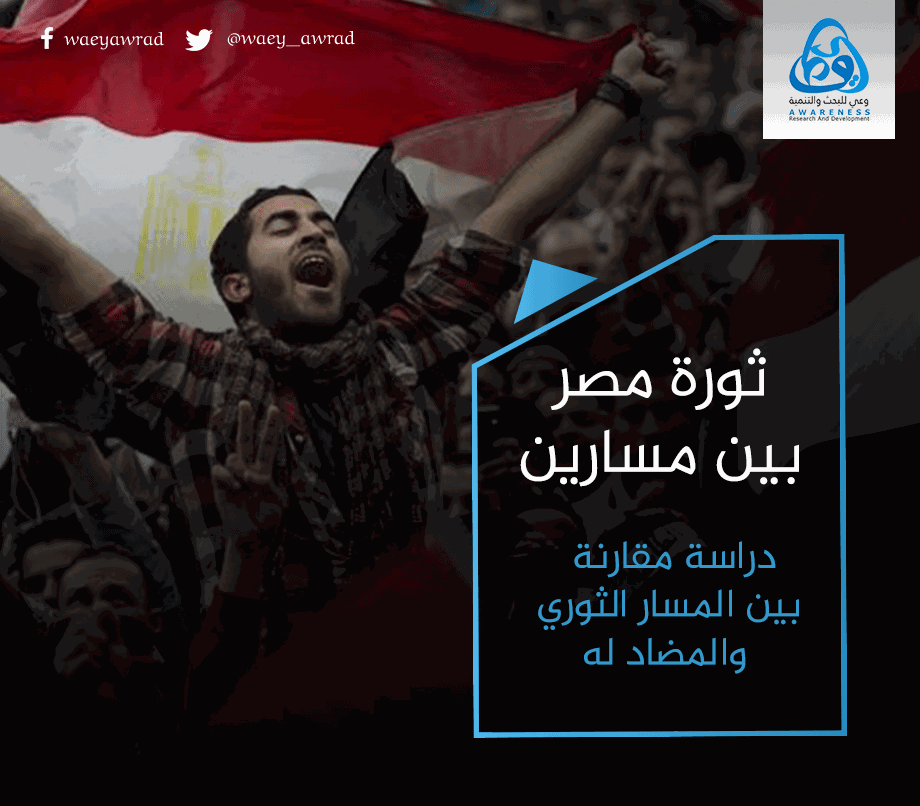
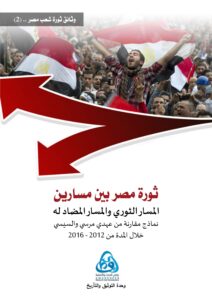
The January 25 Revolution represented a true moment of liberation for the dreams of the Egyptian and Arab youth, raising the ceiling of society’s ambition and its bet on its main pillar, which is its young men and women. However, the military coup on July 3, 2013 quickly overthrew all the dreams held by the Egyptian and Arab nation, so that the youth found themselves residents of detention centers and prisons after they had been flying over the heads of demonstrators in the squares and dreamers on the screens. In light of its endeavor to build a follow-up comparison of the process of conflict between the two tracks, the revolutionary track, and the counter-track through the Morsi government and the Sisi government, which represent practical manifestations of the outcomes of each track, the Waaa Foundation for Research and Development’s study, which was titled (Egypt’s Revolution between Two Tracks…The Revolutionary Track and the Counter-Track: Comparative Models from the Morsi and Sisi Eras during the Period from 2012-2016), paid attention to the youth axis between the eras of the revolution. And the military coup. The study confirmed the keenness of the first executive authority elected by the people, represented by President Mohamed Morsi, and the government of Hisham Qandil, to develop a program for youth that was marred by some errors, and also included important positive paths. The clear error was its inability to empower the youth of the revolution with competencies and qualifications early on in all aspects of the state to involve them in responsibility, which is one of the gaps through which the counter-revolution entered. The study enumerated the most important positive paths in this regard, and highlighted the achievement by the Ministry of State for Youth, led by Dr. Osama Yassin, Minister of Youth, of establishing the National Strategy for Egyptian Youth (2013-2017), which was drafted by a council composed of 90 young people from all political affiliations and youth and revolutionary movements, in addition to hundreds of other young people across the Egyptian country who were included in workshops and opinion polls. This is a new situation for the Egyptian youth community that it had not witnessed before the January 25 Revolution, and then it stopped completely. After the coup of July 3. According to the study, the strategy included the following items:
- Empowering young people from their institutions, whether in employment or management, through enacting regulations and legislation to guarantee this, even if actual empowerment did not occur due to the short period of time that the first elected authority remained in Egypt, in addition to the state of polarization created by the counter-revolutionary forces by spreading the story of brotherhood, spreading frustration, or pushing some aspirants to raise the ceiling of demands.
- Providing Egyptian youth with the opportunity without discrimination to practice activities, benefit from the Ministry’s facilities as their inherent right, and liberate them from the power of their monopolists.
- Priority is given to border areas and deprived villages in the plans to develop youth centers and Ministry facilities, including (Sinai – Upper Egypt – border areas). Then priority comes to the villages and cities of the Delta, then Cairo and Alexandria.
- Supporting the families of martyrs and those injured in the revolution, and providing them with service privileges in the Ministry’s facilities.
- Concluding regional and international partnerships and agreements to serve Egyptian youth.
- Youth contribution to eliminating government bureaucracy in cooperation with other ministries.
- Contributing to solving the main problem of Egyptian youth, which is unemployment, and producing creative ideas to confront this problem.
- Adopting youth initiatives and nurturing distinguished talents among them.
- Qualifying and developing the youth of the revolution in particular and the Egyptian youth in general on political practices, and empowering them with the tools for success and contributing to Egypt’s leadership and rebuilding.
In the procedural process of empowering and caring for youth, the study reported the achievement of the following:
- Drafting Article (71) of the Egyptian Constitution related to youth and youth.
- Preparing a general law for youth for the first time in Egypt.
- Issuing and approving the bylaws for youth centers, which work to empower young people on the boards of directors of youth centers by specifying the age of candidates for youth center elections and the condition that they do not exceed 45 years.
- Empowering young people in the Ministry of Youth’s facilities through successive ministerial decisions, such as opening the Ministry’s facilities for free on vacations and holidays, exempting those injured in the revolution and the disabled, and reducing the annual subscription to youth centers.
- Supporting the families of Al-Ahly Club martyrs in the Port Said massacre, adopting their position until they receive their rights, and allocating 4 million pounds as an annual pension to their families.
The big collapse
After the coup of July 3, 2013, all these measures were frozen, and everything that referred to them, or provided for their development or the continuation of good ones, was completely deleted from the ministry’s website. All of that was replaced by false youth conferences that had nothing on the ground. The youth of the Islamic movement were excluded, followed by the youth of the liberal trends, April 6, and the youth of the parties who were on the side of the coup, thinking that it would speed up the fulfillment of their demands from all movements. And affiliations, and all of them became either prisons inside Egypt, or chased by Interpol outside it, or swallowed up by the sea on mass migration trips towards Europe. According to the study, more than thirty thousand of Egypt’s best youth are languishing in Egyptian prisons, according to an estimate by the Arab Network for Human Rights (the Arab Organization for Human Rights based in Britain), in addition to the flight of tens of thousands out of Egypt, the forced disappearance of hundreds, and the direct field liquidation of dozens under the pretext of terrorism, or the fabrication of crimes for groups from all sectors of society, and even those who supported the July 3 coup on several occasions, as happened to cover up the murder of the Italian youth “Regeni,” where a group of Egyptian youth were killed. Under the pretext that they were the gang that killed the Italian researcher, and it became clear – later, after the Italian authorities insisted on rejecting the Egyptian regime’s story – that they were innocent, and the authority did not open any investigation into the killing of these young men, nor into how the authority obtained confessions from their families that they were the ones who killed the victim, and it turned out that they were confessions under threat and torture, and to intimidate them by killing others of their children! The study quoted a striking comment by Dr. Seif El-Din Abdel Fattah about the situation of the youth between the two tracks (the revolution and the forces opposing it), in which he explains that since the January 25 revolution, the Egyptian youth have been the ones who constitute the revolutionary action and the real energy in the revolutionary situation. They are the ones who made all the sacrifices that would enable this revolution and achieve its goals (living – freedom – human dignity – social justice), but the forces that lie in wait for the revolution and its goals, and form the line of defense for the deep state of corruption and its pillars, and establish a counter-revolution, and try to suppress this revolution with its goals, and attack it, so targeting these young people was one of the priorities of those counter-revolution forces. According to the Youth Development Index for 2016, issued by the Commonwealth Foundation, Egypt’s ranking fell by about 52 places during the 3 years of the coup’s rule, to come in 138th place out of 183 countries included in the index, compared to 86 in the 2013 index. Another point that the index makes clear is the weakness of youth’s political participation, and this negativity is due to the nature of political life. In Arab countries where there are generally exclusionary laws and practices, and the index took Egypt as an example of this negativity, everyone who will demonstrate – currently – will face imprisonment. According to observers, the security services respond to any demonstration with immediate or pre-emptive arrest. It is noteworthy that the “Awareness” study aims to raise awareness of the facts of the conflict between the paths of the revolution and the coup in a language based on numbers and statistics related to the Egyptian situation carried out by specialists in scientific centers, field studies, and conclusions of respected international organizations in economics, politics, human rights, and others. The study relied on a group of diverse sources, theoretical and field studies that dealt with the Egyptian situation in all its details during the various stages of the revolution, and included statistics, comparisons and critical analyzes by experts and specialists, including economic reports such as: reports of the Central Bank of Egypt, the World Bank, the European Union, the Economist magazine, reports of the Ministry of Administrative Development in Egypt, the Central Auditing Organization, human rights organizations, the Mobilization and Statistics Authority, documentary reports and periodical books, and analysis of letters and data. Political and economic reports issued by relevant authorities and other sources. To obtain your copy of the study (Egypt between two paths) (Click here)